

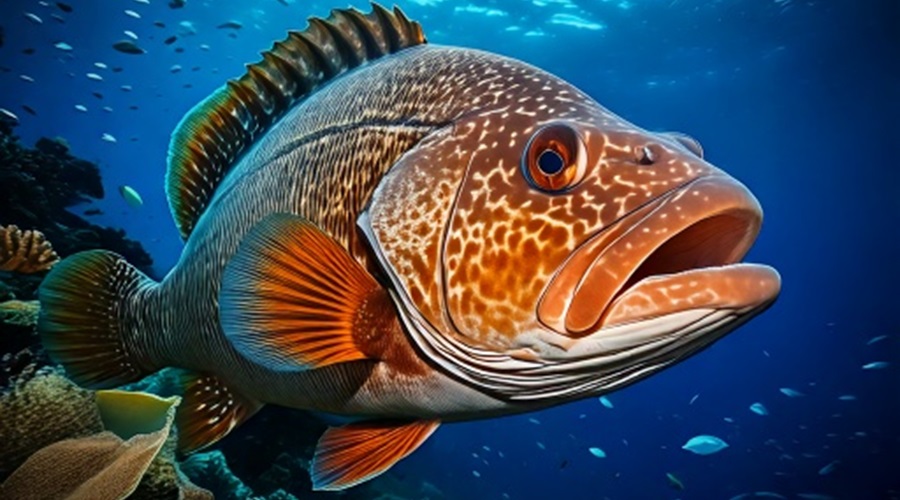
Grouper. Image created with Adobe Firefly.
Aquatic animals that breathe through gills — including most fish and many invertebrates — are the backbone of life in oceans, lakes and rivers. They support biodiversity, shape food webs and sustain fisheries that feed millions of people worldwide. Understanding how these animals grow, reproduce and survive is therefore essential to understanding how aquatic ecosystems work — and how they continue to support human societies.
Yet these environments are changing rapidly. As waters heat up and oxygen levels decline, scientists are racing to comprehend how aquatic species will respond. A new Fisheries Centre Research Report tackles this challenge by examining the physiological limits that shape the growth and survival of water-breathing animals, bringing together decades of research to shed light on how these organisms function in a warming world.
A key focus of the report is the ongoing scientific debate around the Gill-Oxygen Limitation Theory (GOLT) — a hypothesis developed by the Sea Around Us PI, Dr. Daniel Pauly, which links the growth of aquatic animals to the capacity of their two-dimensional gills to supply oxygen to their three-dimensional bodies. Rather than treating individual studies as final answers, the report highlights how progress in complex fields depends on evaluating the weight of evidence across many species, methods and datasets. It shows how differences in data selection, analytical approaches and interpretation can influence conclusions, and why careful, transparent scientific debate is essential.
The result is the product of a body of work built over the past 40 years and aimed at building a unifying framework for understanding how water-breathing animals grow and reproduce. At the same time, the report challenges researchers to continue testing the theory — and to develop alternative explanations that can account for the same wide range of biological patterns.
“A Convergence of Evidence: The Gill-Oxygen Limitation Theory (GOLT)” can be accessed at this link.