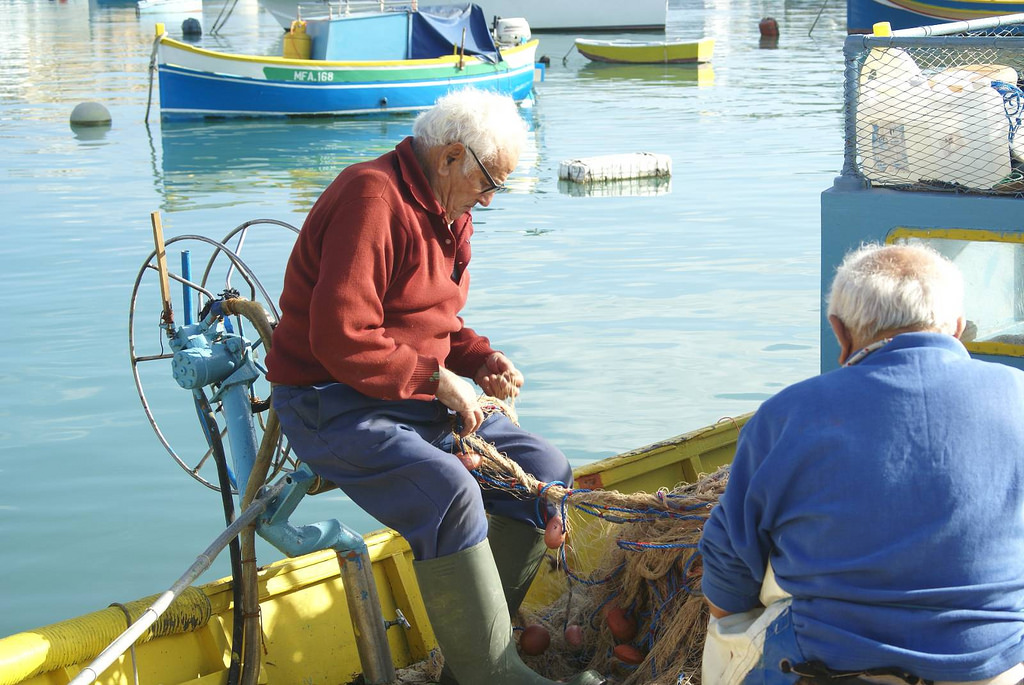
Fishermen in Żejtun, Malta. Photo by Ramon Casha, Flickr.

In less than two minutes, learn why fish catches are declining

Fishermen in Żejtun, Malta. Photo by Ramon Casha, Flickr.

Fishermen in Żejtun, Malta. Photo by Ramon Casha, Flickr.

As the Sea Around Us team revealed in its 2016 Nature Communications paper, fish catches have been declining, on average, by 1.2 million metric tons per year since 1996.

This decline has resulted in lower per capita seafood availability and threatened food security in poor, developing countries. In fact, a group of scientists, among them the Sea Around Us Executive Director Dirk Zeller, has predicted that 11% of the global population could face micronutrient and fatty-acid deficiencies driven by fish declines over the coming decades.

That is 845 million people living with extremely low levels of iron, zinc or vitamin A.
“Considering nutrients found only in foods derived from animals, such as vitamin B12, and DHA omega-3 fatty acids (almost exclusively derived from meat consumption), we calculate that 1.39 billion people worldwide (19% of the global population) are vulnerable to deficiencies because fish make up more than 20% of their intake of these foods by weight,” the group has written.

There are many reasons why fish stocks are declining worldwide. However, and as the Sea Around Us principal investigator Daniel Pauly summarizes in the below video, at the root of the problem lies indiscriminate human activity.
Global Atlas of Marine Fisheries

Global fisheries trends in one book

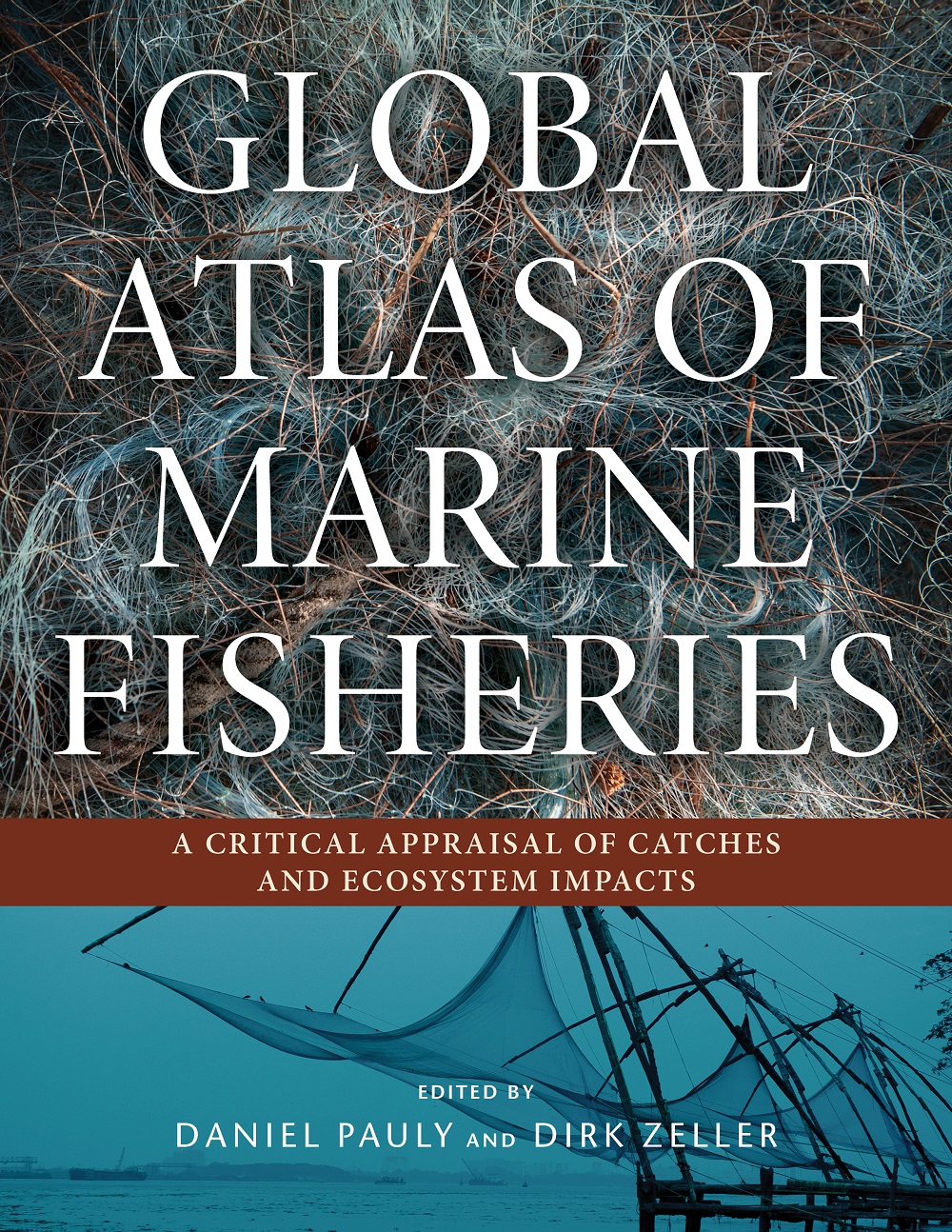
The Sea Around Us team recently launched the Global Atlas of Marine Fisheries, the first book to provide accurate, country-by-country fishery data.

In just a few months since it was released to the market by Island Press, the Atlas has become an indispensable resource for researchers, students, fishery managers, professionals in the fishing industry, environmentalists, and so on.

It has also gathered attention from the press in Canada, the US, Spain, and Venezuela.

On the below video, Dr. Daniel Pauly, the Sea Around Us principal investigator, expands on the findings published in the book regarding reported vs. unreported global catch and the challenge of dealing with unreliable statistics from certain countries, among other topics.


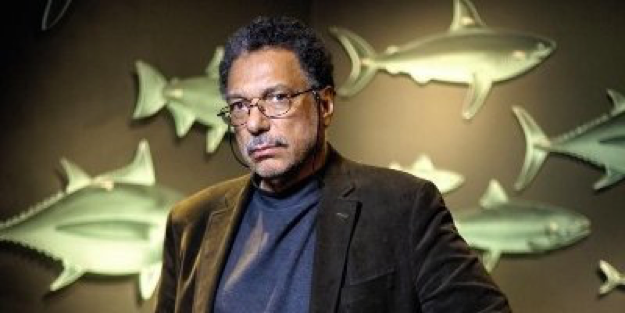
Dr. Daniel Pauly (Photo from http://cars.fisheries.org/

Daniel Pauly awarded the 2016 Albert Ier Grand Medal

Photo: M. dagnino – Institut océanographique.

Photo: M. dagnino – Institut océanographique.

Just a day after World Fisheries Day, Sea Around Us Principal Investigator, Dr. Daniel Pauly, was awarded the 2016 Albert Ier Grand Medal in the Science category during a ceremony held at the Maison des Océans in Paris.

The Albert Ier Grand Medal is the most prestigious prize given by the Oceanographic Institute to great names of the marine world. It takes the form of a medal in gilded bronze bearing the embossed profile of Prince Albert Ist, a pioneer of modern oceanography and founder of the Institute.

Dr. Pauly is acknowledged as one of the greatest specialists of marine resources and the effects of overfishing in the world.

Besides attending the gala, Dr. Pauly is set to participate in the conference “Only One Ocean: Issues and Solutions,” which was organized by The Pew Charitable Trusts and the Institute also with the idea of honouring him.

Continue reading

A perfect storm: Climate Change and Overfishing

The Sea Around Us has been featured in the IRIN news network, with an extensive story outlining how overfishing and climate change are warping our marine ecosystems. Within the story, Executive Director and Senior Scientist Dr. Dirk Zeller provides analysis of how the Sea Around Us data is helping to better understand the crisis.

*********

boatsonbeachgreatimage

By Jared Ferrie

Oceans have absorbed more than 93 percent of the heat generated by human activity since the 1970s, according to a report published this month by the International Union for Conservation of Nature and Natural Resources. Continue reading

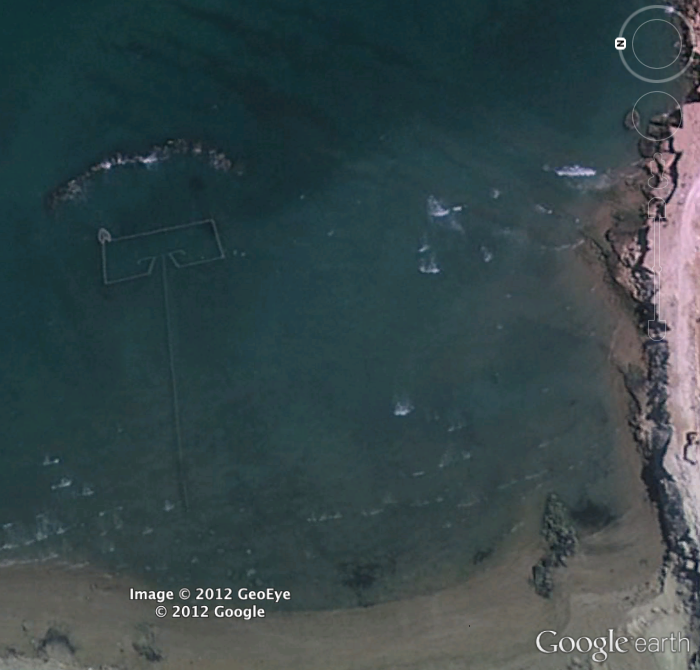
Google Earth reveals unreported fishing

Screen shot 2012-09-19 at 1.24.15 PMIn the Persian Gulf, large, semi-permanent fish traps take advantage of tidal differences to catch a wide variety of marine species. These traps, called fish weirs, have been used around the world for thousands of years, but only recently have researchers quantified what they catch using imagery captured from space.

In a new study published today in the ICES Journal of Marine Science, Sea Around Us Project researchers used satellite imagery from Google Earth to estimate that there were 1,900 fishing weirs along the coast of the Persian Gulf during 2005 and that they caught approximately 31,000 tonnes of fish that year. This catch is almost six times larger than the official amount (5,260 tonnes) reported by the seven countries in the region to the United Nation’s Food and Agriculture Organization.

This study highlights the utility of Google Earth and other remote sensing tools for validating catch statistics and fisheries operations in general.

You can find out more about the study here:
Press release from the University of British Columbia,
Web feature summarizing the study from The Pew Charitable Trusts,
Journal article published in ICES Journal of Marine Science.

Al-Abdulrazzak D and Pauly D (2013) Managing fisheries from space: Google Earth improves estimates of distant fish catches. ICES Journal of Marine Science. doi:10.1093/icesjms/fst178