Global Atlas of Marine Fisheries

Sea Around Us’ new Atlas reveals why the ocean is giving us 1.2 million MT less of fish every year

Global Atlas of Marine Fisheries

Global marine fisheries catches have been declining, on average, by 1.2 million metric tons every year since 1996 and FAO knew very little about this.

Fortunately, the Global Atlas of Marine Fisheries has just been released and it explains, in detail and country-by-country, the reasons behind this unprecedented phenomenon, its consequences when it comes to food security and the steps that can be taken to ease the dire situation. Continue reading

A perfect storm: Climate Change and Overfishing

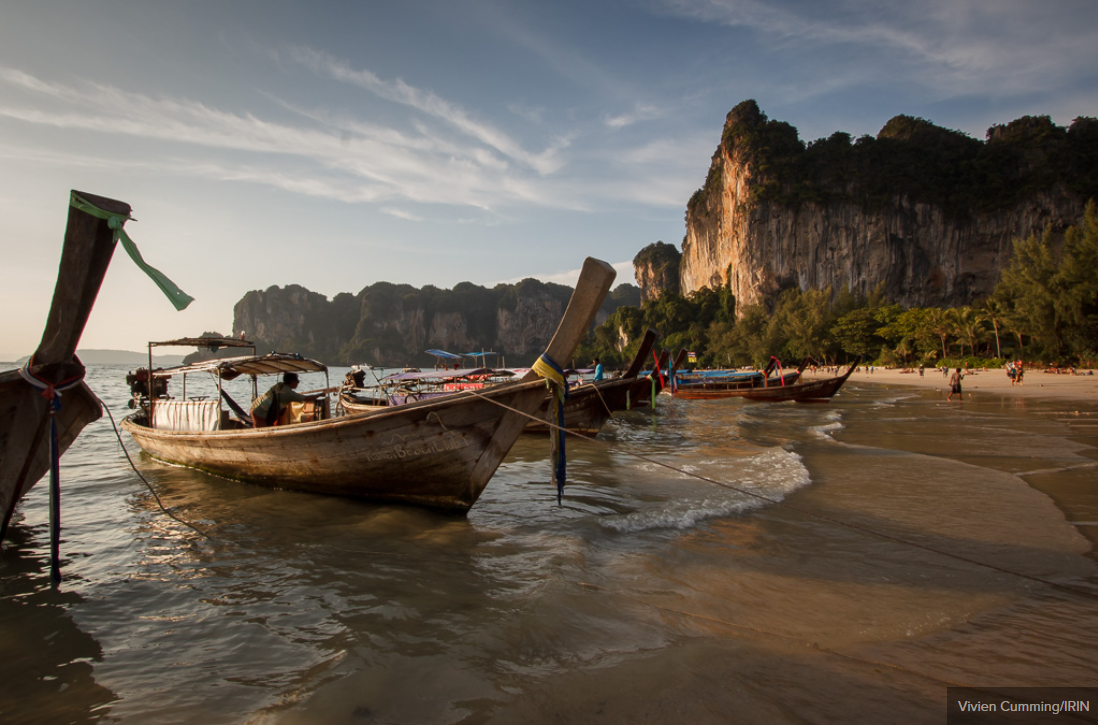
The Sea Around Us has been featured in the IRIN news network, with an extensive story outlining how overfishing and climate change are warping our marine ecosystems. Within the story, Executive Director and Senior Scientist Dr. Dirk Zeller provides analysis of how the Sea Around Us data is helping to better understand the crisis.

*********

boatsonbeachgreatimage

By Jared Ferrie

Oceans have absorbed more than 93 percent of the heat generated by human activity since the 1970s, according to a report published this month by the International Union for Conservation of Nature and Natural Resources. Continue reading

Google Earth reveals unreported fishing

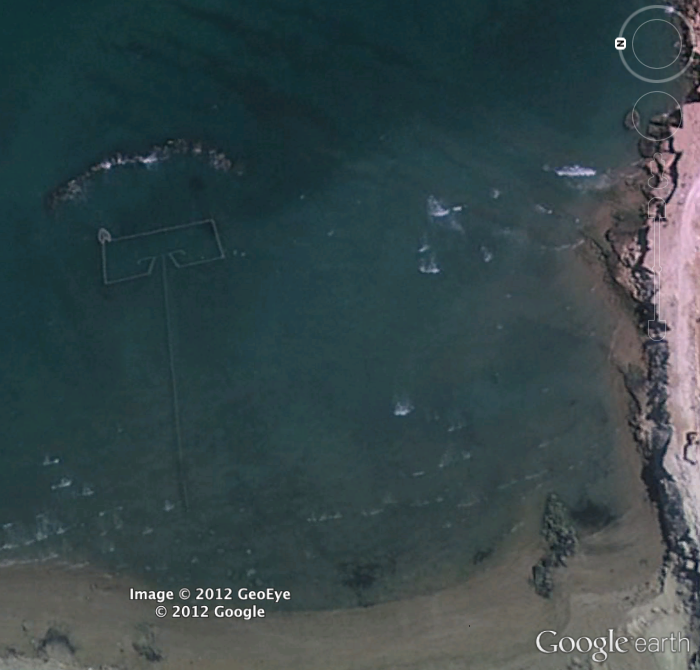
Screen shot 2012-09-19 at 1.24.15 PMIn the Persian Gulf, large, semi-permanent fish traps take advantage of tidal differences to catch a wide variety of marine species. These traps, called fish weirs, have been used around the world for thousands of years, but only recently have researchers quantified what they catch using imagery captured from space.

In a new study published today in the ICES Journal of Marine Science, Sea Around Us Project researchers used satellite imagery from Google Earth to estimate that there were 1,900 fishing weirs along the coast of the Persian Gulf during 2005 and that they caught approximately 31,000 tonnes of fish that year. This catch is almost six times larger than the official amount (5,260 tonnes) reported by the seven countries in the region to the United Nation’s Food and Agriculture Organization.

This study highlights the utility of Google Earth and other remote sensing tools for validating catch statistics and fisheries operations in general.

You can find out more about the study here:
Press release from the University of British Columbia,
Web feature summarizing the study from The Pew Charitable Trusts,
Journal article published in ICES Journal of Marine Science.

Al-Abdulrazzak D and Pauly D (2013) Managing fisheries from space: Google Earth improves estimates of distant fish catches. ICES Journal of Marine Science. doi:10.1093/icesjms/fst178

Ensuring better fisheries management in West Africa


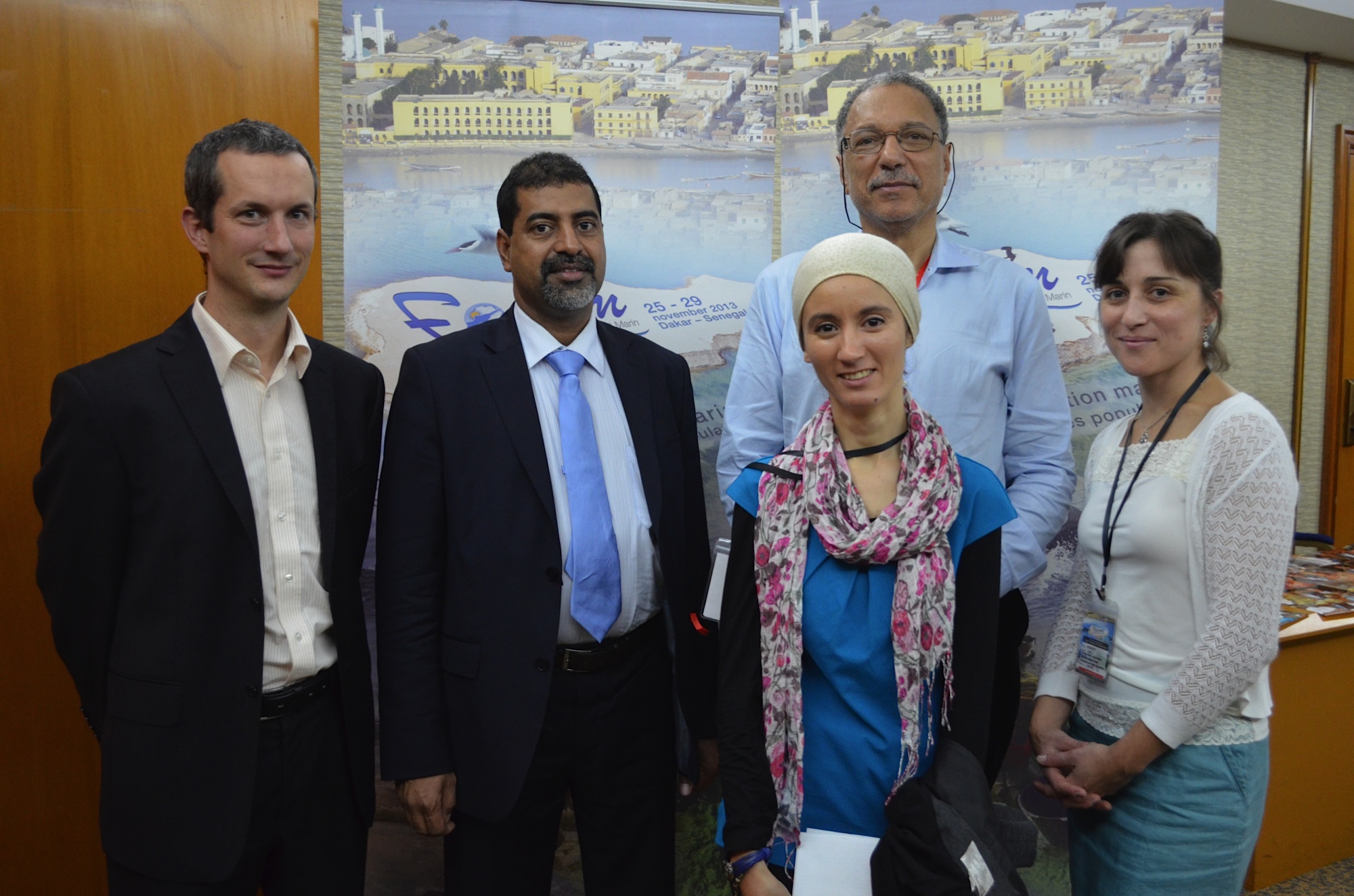
This week, the Sea Around Us Project’s Principal Investigator, Daniel Pauly, and one of our PhD students, Dyhia Belhabib, attended the Regional Marine and Coastal Forum held in Dakar, Senegal, where representatives from eight West African countries gathered to discuss the status of fisheries in the region and their future. Their goal was to engage the countries in tackling unreported fishing.

By working with researchers at the Sea Around Us Project to assess their fisheries from 1950 to 2010, these countries have identified the extent of unreported fishing in their waters – which is often as much as double what is officially reported.

“Fishing operations in West Africa have been catching much more than anyone previously realised and reported,” says Dyhia Belhabib. “The research we are conducting in partnership with West African countries gives them the first complete historical picture of their fisheries.”

In response, some countries in the region have started to take steps to address the gaps and improve fisheries management. In Senegal, the government has developed a fisheries commission and signed an agreement to improve the current reporting and management of its fisheries.

“This joint research is shedding new light on the true extent of past fishing in West Africa,” says Daniel Pauly. “Our hope is that these countries will now adopt the results and use them to contribute to better fisheries management in the future.”

You can read the complete press release in English and French here.

Documenting history in Turkey

Aylin Ulman

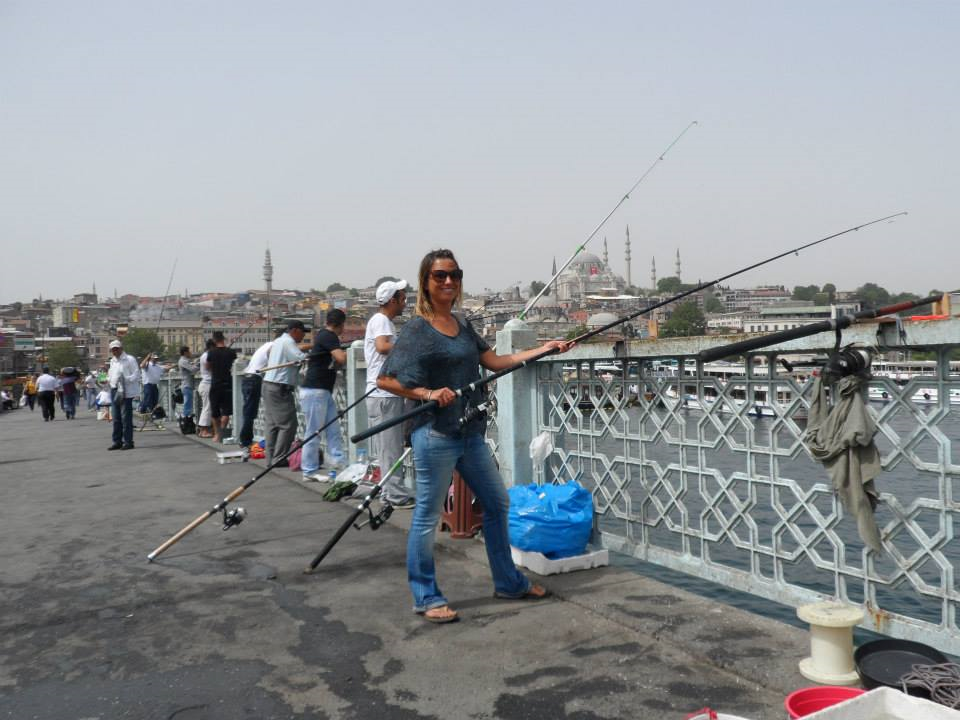
The author conducting research on recreational anglers on Galata Bridge, in the Golden Horn estuary of Istanbul (© A. Ulman)

by Aylin Ulman

In 2011, I began working for the Sea Around Us Project to complete catch reconstructions for Eastern Mediterranean and Black Sea countries. I quickly realized, while studying Turkey’s fisheries, that some marine ecosystems of Turkey recently underwent immense reductions of commercial species [1], leading to entire trophic shifts, but little data were available to explain these issues. At the beginning of my MSc with Daniel Pauly in 2012, it was decided that I’d go to Turkey to document the shifting baselines syndrome, i.e., gradual shifts in perception of the ecosystem, and collect details on these missing species/habitats.

Continue reading