Aquatic animals that breathe through gills — including most fish and many invertebrates — are the backbone of life in oceans, lakes and rivers. They support biodiversity, shape food webs and sustain fisheries that feed millions of people worldwide. Understanding how these animals grow, reproduce and survive is therefore essential to understanding how aquatic ecosystems work — and how they continue to support human societies.

Tag: Sea Around Us
Swipe right for healthy oceans

In thinking about February as Valentine’s Month, we invited our social media followers to “swipe right for healthy oceans.”
In a series of four posts showcasing country snapshots and designed to mimic a dating app interface, we presented how the Sea Around Us‘ fisheries data help us explore what ocean health looks like in different parts of the world. Each post highlights key strengths and challenges, grounded in catch reconstructions, stock assessments, and nutrition data.
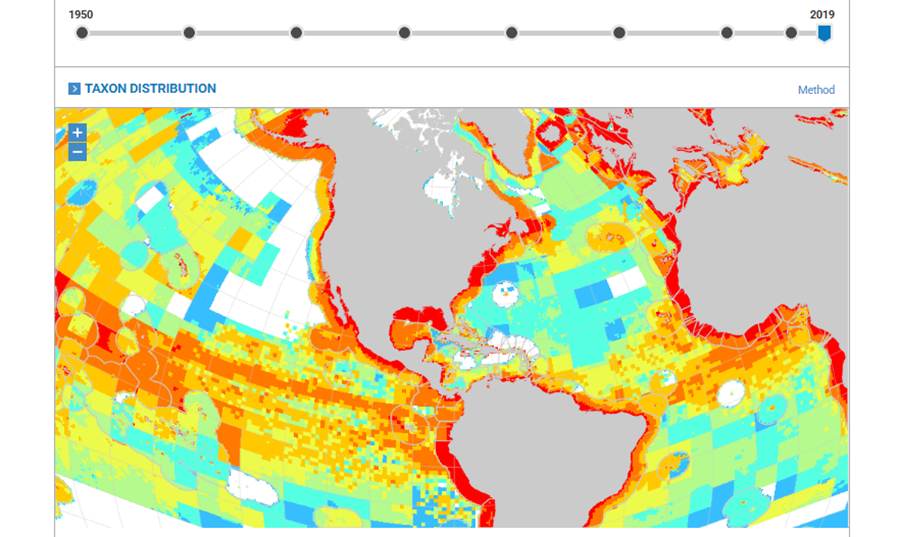
What do 70 years of fishing pressure really look like?

The video below shows the performance of one of the Sea Around Us most useful tools: the Mapped Data. By moving the lever from left to right, users can see how global fishing activity has expanded from 1950 to 2019.
Animal-welfare models fail to account for fish’s need for oxygen

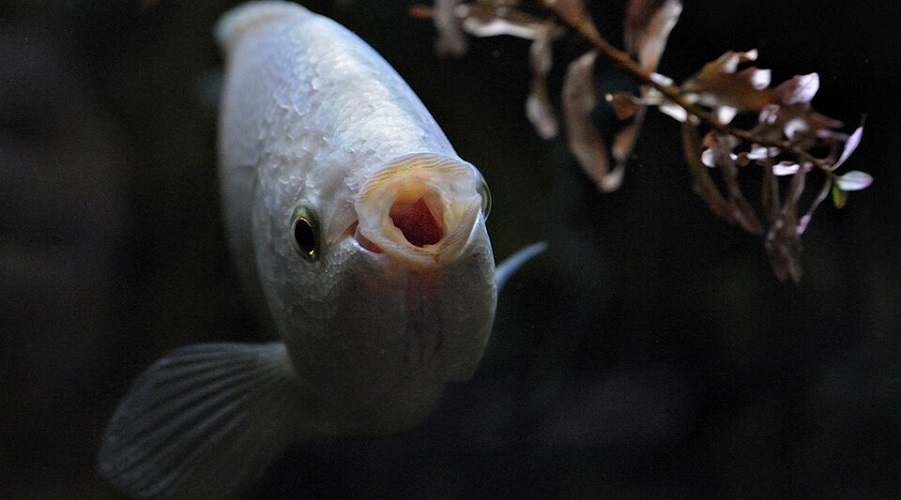
Helostoma temminckii or kissing gourami. Image by Jörn, Wikimedia Commons.
A new essay published in Issues in Science and Technology argues that current animal welfare science and policy frameworks overlook a fundamental aspect of the lives of fish and other aquatic “water-breathing” species — and calls for a shift in how governments, researchers, and industry assess humane treatment in aquaculture, research, commercial fisheries, and in the wild.