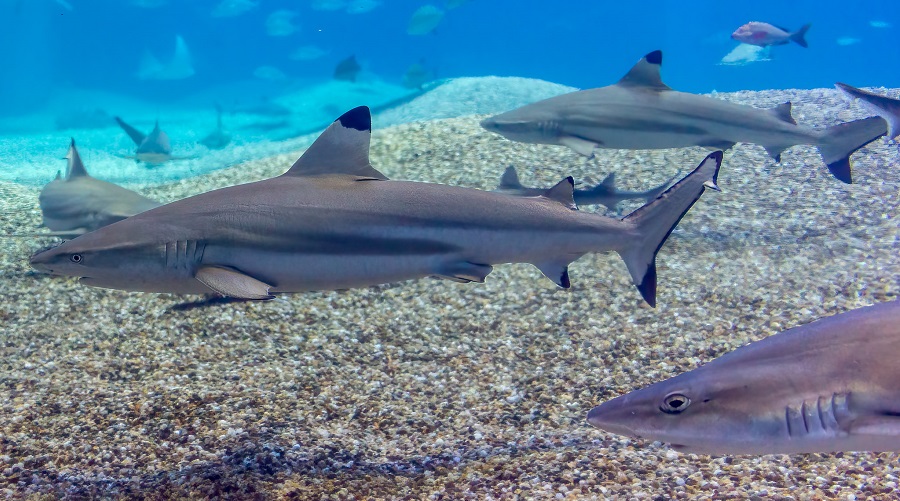
Blacktip reef shark

Marine sharks and rays ‘use’ urea to delay reproduction

Blacktip reef shark

Blacktip reef shark. Photo by Ray in Manila, Flickr.

Urea – the main component of human urine – plays an important role in the timing of maturation of sharks, rays and other cartilaginous fish.

A new study by researchers with the Sea Around Us initiative at the University of British Columbia’s Institute for the Oceans and Fisheries found that high urea concentrations common in cartilaginous fish, particularly oviparous marine species, allow them to mature and begin to reproduce at a larger fraction of their maximal size.

Continue reading

Bighead carp gill rakers

Toward a one-day conference devoted to the Gill-Oxygen Limitation Theory

Bighead carp gill rakers

Bighead carp gill rakers. Photo by Invasive Carp Regional Coordinating Committee, Flickr.

At the last annual meeting of the FishBase Consortium, held 5-7 September 2023 in Tervuren, Belgium, it was decided that the next FishBase/SeaLifeBase Symposium, traditionally held before the FishBase Consortium meeting, to be held in early September 2024 in Thessaloniki, Greece, would last two days, with the first devoted to a session on the Gill-Oxygen Limitation Theory, or GOLT.

Continue reading

Dead Fish Washed Ashore during Golden Alga Toxic Bloom

Large fish more vulnerable to climate change-induced fish kills

Dead Fish Washed Ashore during Golden Alga Toxic Bloom

Reference image of dead fish washed ashore during a golden algae toxic bloom. Photo by Michael Hooper, USGS.

Climate change-induced droughts and fish kills affect larger fish more severely than smaller individuals, according to new research.

In a paper published in Environmental Biology of Fishes, researchers from Leiden University, Sportvisserij Zuidwest Nederland and the Sea Around Us initiative at the University of British Columbia compared evidence from drought-induced fish kills in the Netherlands, fisheries management literature and multiple physiological studies. They confirmed that when water gets warmer and deoxygenated, larger and older individuals within a species tend to die in greater numbers than their smaller and younger counterparts.

Continue reading