
Photo by Alison Barrat.
This week, the Sea Around Us Principal Investigator, Daniel Pauly, is offering a public lecture titled “New ways to view complex oceans data.”


Photo by Alison Barrat.
This week, the Sea Around Us Principal Investigator, Daniel Pauly, is offering a public lecture titled “New ways to view complex oceans data.”

Instructors and participants at the CMSY workshop in Qingdao.
In June 2019, the Sea Around Us PI, Dr. Daniel Pauly, and Project Manager, Dr. Deng Palomares, co-hosted a successful, three-day workshop at the Institute of Oceanology of the Chinese Academy of Science (CAS) in Qingdao, a city on China’s Yellow Sea coast. They were assisted by graduate student Lu Zhai and long-time Sea Around Us collaborator Dr. Liang ‘Elsa’ Cui.
Initially proposed by Canada at the Earth Summit in Rio de Janeiro in 1992 and officially recognized by the United Nations in 2008, this day celebrates the ocean and its importance for all living creatures.
World Oceans Day provides also an opportunity for researchers, policymakers, and environmentalists to highlight the most urgent issues affecting the planet’s largest waterbody.
Since this June the Sea Around Us is celebrating not only World Oceans Day but also its 20th Anniversary, it seemed appropriate to reflect on the importance of paying attention to marine fisheries.
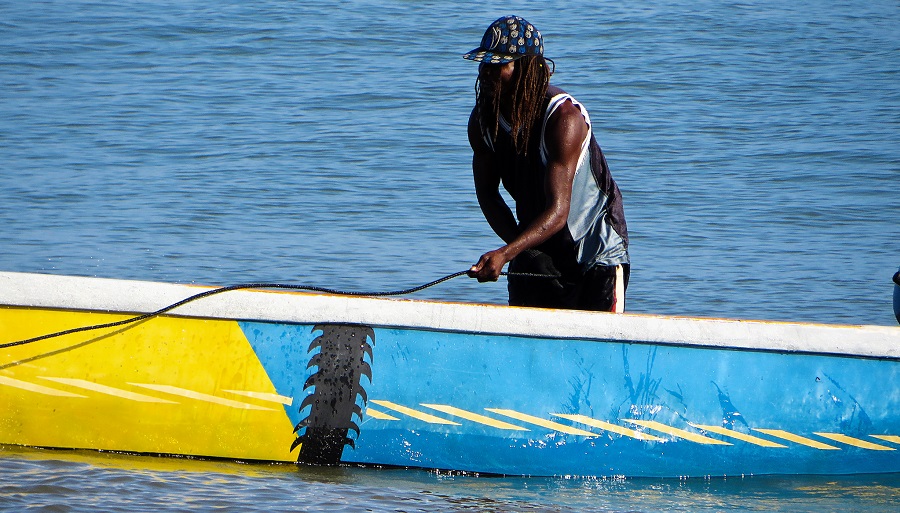
Fishing boat off the coast of Honduras. Photo by Kristin Klein, Flickr.
Artisanal fisheries catches taken from Honduras’ Exclusive Economic Zone have contributed far more than previously thought both to the economic growth and the food security of this Central American country, new research has found.
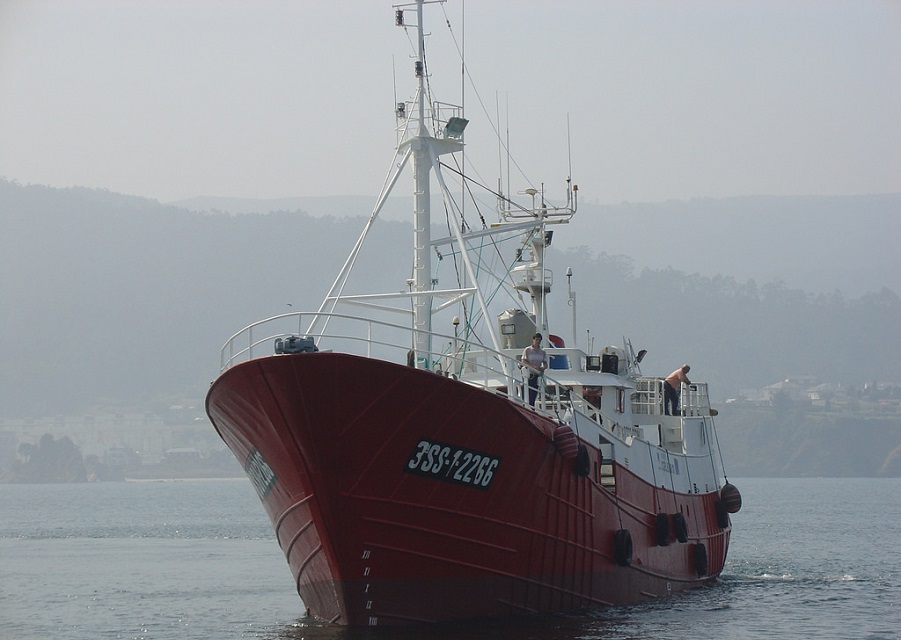
Pellizar 133. Photo by O roxo Flickr.
Carbon dioxide emissions from the fuel burnt by fishing boats are 30 per cent higher than previously reported, researchers with the Sea Around Us initiative at the University of British Columbia and the Sea Around Us – Indian Ocean at the University of Western Australia have found.
In a study published in Marine Policy, the scientists show that 207 million tonnes of CO2 were released into the atmosphere by marine fishing vessels only in 2016. This is almost the same amount of CO2 emitted by 51 coal-fired power plants in the same timeframe.