ON VIDEO: Daniel Pauly and the Global Atlas of Marine Fisheries

The Aquatic Ecosystems Research Laboratory 120 was packed and people on social media were frantically asking about how to join the Facebook Live stream.

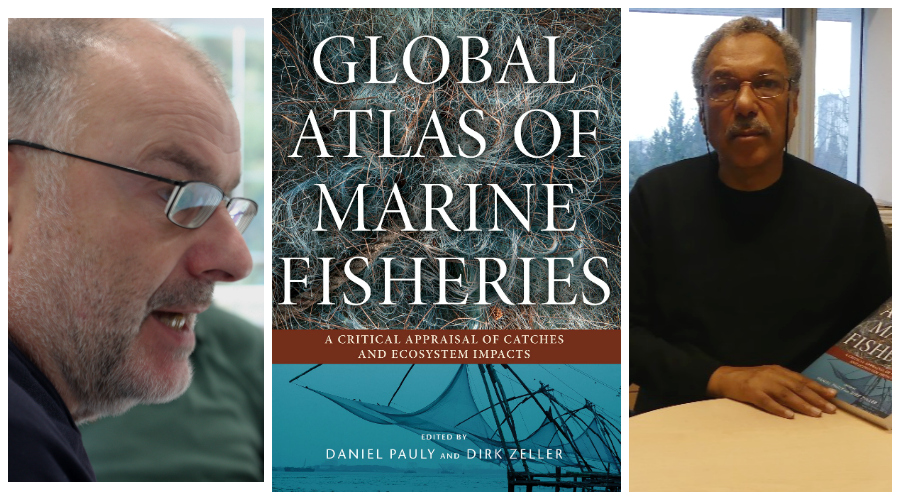
For over an hour, the Sea Around Us Principal Investigator, Daniel Pauly, presented the methods and findings in the Global Atlas of Marine Fisheries, which he published in late 2016 together with Dirk Zeller.

For those who could not be in attendance, the IOF’s communications department prepared series of videos that capture the highlights from Pauly’s presentation.

Continue reading

IOF Seminar Series: Global Atlas of Marine Fisheries

On February 17, 2016 the Sea Around Us‘ Daniel Pauly and Dirk Zeller will be sharing their views on the importance of the Global Atlas of Marine Fisheries, the first book to provide accurate, country-by-country fishery data.

Their presentation is part of the IOF Seminar Series held every Friday at the Aquatic Ecosystems Research Laboratory 120, located at the University of British Columbia 2202 Main Mall, Vancouver. Continue reading

Why did FAO choose to ignore the existence and trends of the reconstructed catch data?

Marine Policy recently published “Comments on FAOs State of World Fisheries and Aquaculture (SOFIA 2016),” authored by the Sea Around Us leaders Drs. Daniel Pauly and Dirk Zeller.

Both scientists expressed their concern over the implications for resource management and global food security of ignoring information aimed at filling the gaps that exist in the data reported by countries to the Food and Agriculture Organization of the United Nations.

They divide their observations into a few main points:

VIDEO: How much is fished in your country’s waters?

Photo by Alper Çuğun, Flickr.

Trawl nets, drift nets, longlines, etc. have allowed fleets across the world to turn their fishing operations into massive extractive activities.

In several countries’ Exclusive Economic Zones, such expansion has led to depleted fish stocks. Some of those countries, however, have enough capital to buy access to other countries’ waters, extract their resources and sell them across continents. “They are just exporting the problem,” the Sea Around Us Senior Scientist Dirk Zeller has said.

WATCH THE VIDEO TUTORIAL

Continue reading