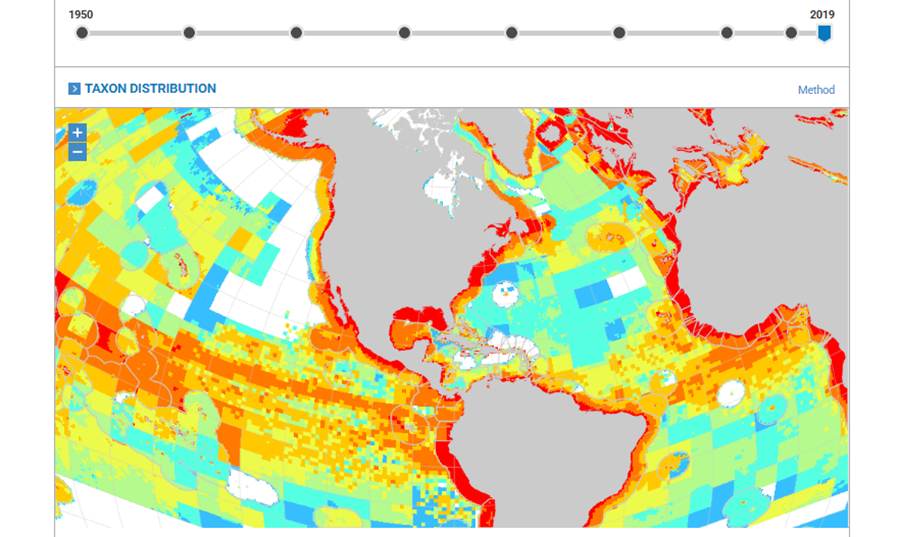
The video below shows the performance of one of the Sea Around Us most useful tools: the Mapped Data. By moving the lever from left to right, users can see how global fishing activity has expanded from 1950 to 2019.
Tag: catch reconstructions
World Fisheries Day 2025: Using Sea Around Us data to support a Blu(er) Economy

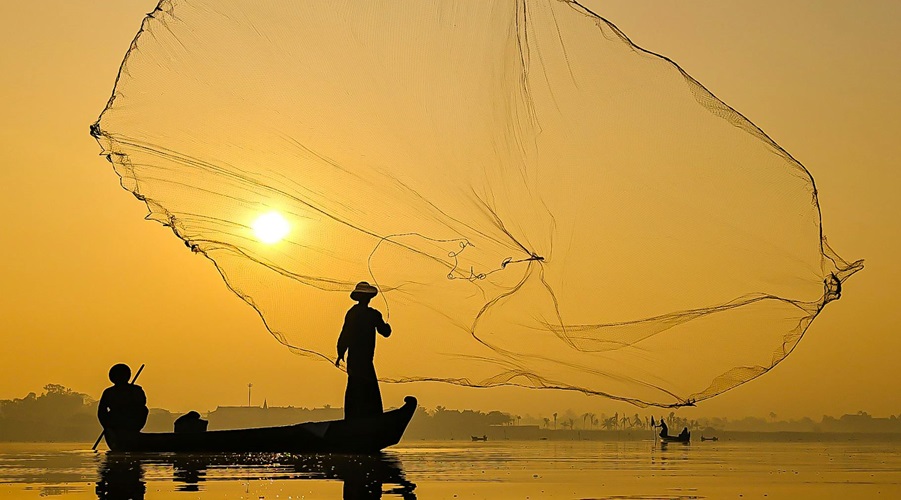
Fisherman casting net at sunset in Mandalay. Photo by Pyae Phyo Aung, Pexels.
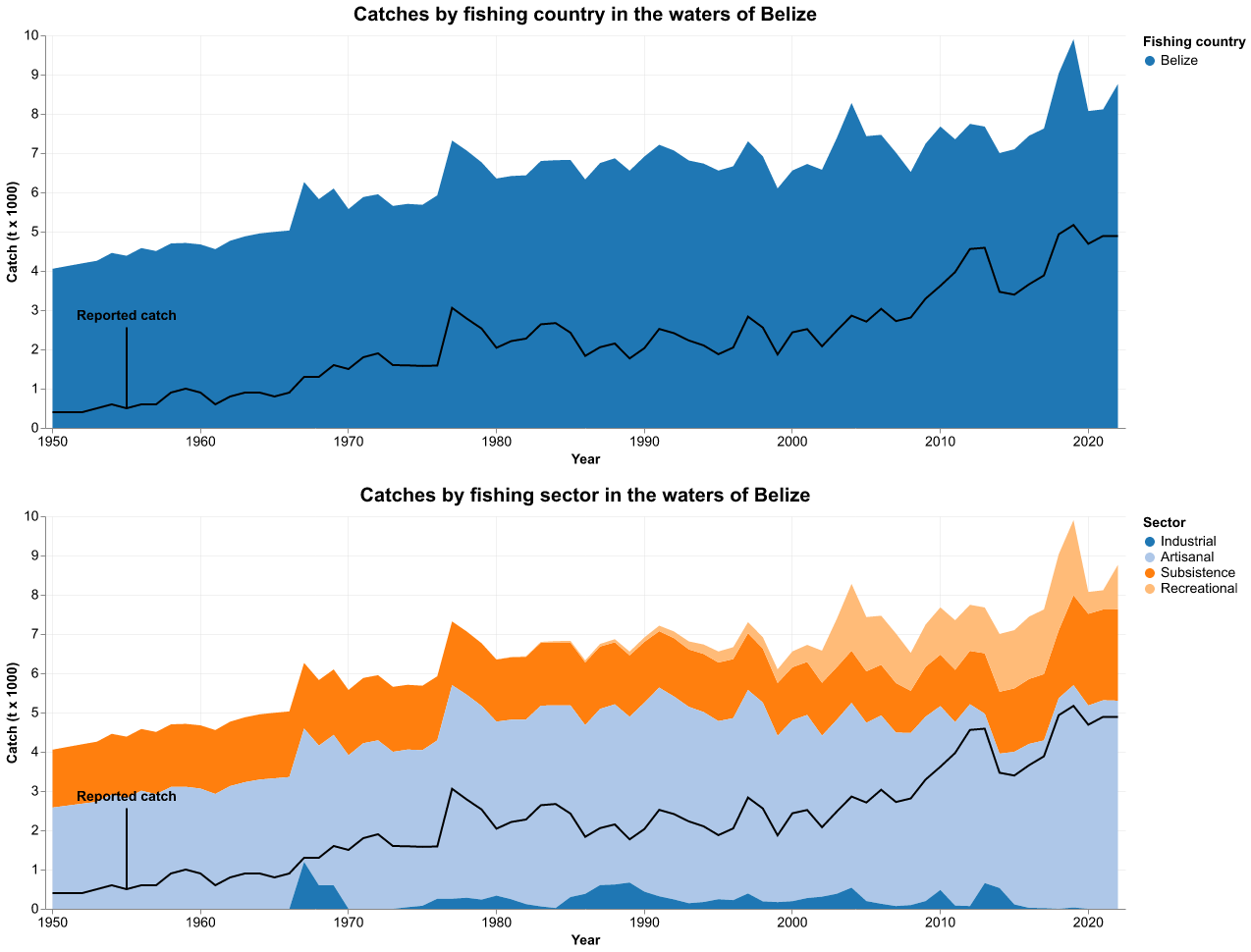
Official statistics from most coastal countries only account for a fraction of what their fisheries catch, the Sea Around Us data and analyses have demonstrated.
As we observe World Fisheries Day 2025, which aims to highlight the importance of promoting sustainable fish stocks and the rights of small-scale fishing communities, it is crucial to remember that without comprehensive data, managing sustainable fisheries is akin to flying blind.
Sea Around Us team exposes coastal ecosystem pressures at Saint Pierre and Miquelon congress

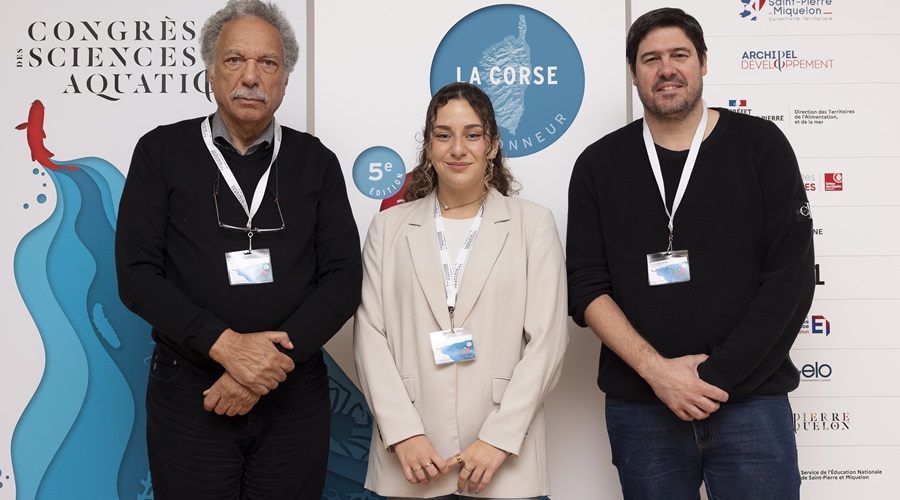
Daniel Pauly, Anna Luna Rossi and Fabrice Teletchea at the 2025 International Congress on Aquatic Sciences in Saint Pierre and Miquelon. Photo by Studio Briand Photographe | Archipel Développement.
The Sea Around Us principal investigator, Dr. Daniel Pauly, and master’s student, Anna Luna Rossi, made a splash in Saint Pierre and Miquelon by participating in the fifth edition of the International Congress on Aquatic Sciences, which took place from September 28th to October 2nd, 2025.
The congress was structured around four main themes—fishing and aquaculture, citizen science and education, aquatic biodiversity, and maritime transport —and hosted 48 presentations, all of them meant to foster exchanges between researchers, businesses, and citizens, with a particular focus on young people.
Sea Around Us publishes preliminary results of catch reconstruction update
Starting in the second half of 2024, the Sea Around Us team embarked on a large-scale project aimed at reviewing the catch reconstructions available in the database for every maritime country and territory, and updating them to 2022.
Indian Ocean fisheries fuel global nutrition — but the benefits are leaving the region

Mogadishu’s fish market. Image by AMISOM Public Information, Wikimedia Commons.
Indian Ocean fisheries are vital for global nutrition as they provide 12 per cent of wild-caught seafood worldwide which, in turn, corresponds to nearly 30 per cent of all calcium from seafood, 20 per cent of vitamin A, 15 per cent of iron, and 13 per cent of vitamin B12.