

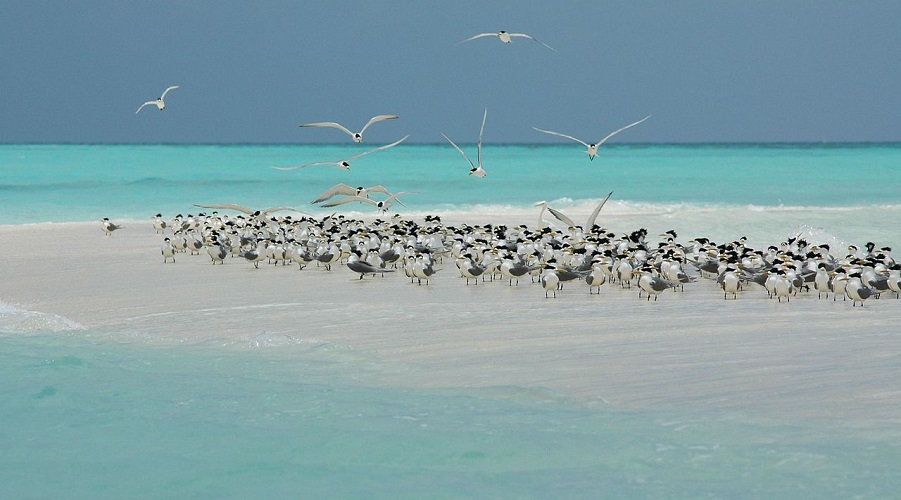
Tubbataha Reefs Natural Park. Image by UNESCO, Wikimedia Commons.
World Oceans Day (WOD), the initiative proposed in 1992 by Canada at the Earth Summit in Rio de Janeiro and officially recognized by the UN in 2008, aims to catalyze collective action for a healthy ocean and a stable climate.
Some of the yearly campaigns thousands of organizations run, inspired by this goal, are guided by the annual action theme that NGO The Ocean Project proposes for WOD. The Ocean Project, together with the World Ocean Network, led efforts to get the UN to recognize June 8th as World Oceans Day.
For 2026, the action theme is “Strong Marine Protected Areas for our blue planet,” which is meant to build on the momentum of recent agreements, such as the 2022 Kunming-Montreal Global Biodiversity Framework and the High Seas Treaty ratified in 2025, and push for stronger ocean conservation actions.
To support this endeavour, every month from January to June 2026, the Sea Around Us will take a deep dive into one MPA in its database and use this blogging space to share, in lay language, what factors make it a successful or unsuccessful MPA.
Tubbataha Reefs Natural Park
The 100,000-hectare Tubbataha Reefs Natural Park is located in the middle of the Sulu Sea, about 150 kilometres southeast of the Philippine island of Palawan’s capital city, Puerto Princesa. It includes the uninhabited North and South Atolls and the Jessie Beazley Reefs, within which there are three atolls and a large deep-sea area.
This UNESCO World Heritage Site is home to sharks, Napoleon wrasse, and over 700 fish species, as well as rays, whales, dolphins, turtles, and 360 coral species, which comprise almost 90 per cent of all coral species in the Philippines. About 181 of the marine species found there are threatened to some degree, from vulnerable to critically endangered.
Tubbataha is also a breeding and rookery ground for many migratory and resident seabirds, including the critically endangered Christmas Island frigatebird, as well as for the endangered green sea turtles and the critically endangered hawksbill sea turtle.
Nowadays known as a premier scuba diving spot, Tubbataha only started to feel the effects of human exploitation in the 1980s. Recognizing its great biodiversity value, the government of the Philippines first protected the area through legislation in 1988 and, in 2006, declared it a Natural Marine Park.
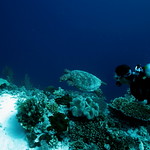
Tubbataha Reefs Natural Park. Image by q phia, Flickr.
“A key aspect of the integrity of the property is the low level of fishing pressure, due to the no-take policies which are in place throughout its area,” this MPA’s UNESCO page reads. This statement corroborates research by the Sea Around Us, which showed that despite having about a dozen park rangers to monitor the entire area, sometimes relying on the support of navy and coast guard vessels, very little to no fishing takes place. The only allowed fishing is to sustain the same park rangers while they wait for the next resupply trip.
Some reports have denounced poaching in the area by Chinese fishing fleets, with a particularly famous incident taking place in 2013, which resulted in 12 people being detained and almost 4,000 square metres of centuries-old coral being damaged. However, more recent cases are hard to find, and it seems that protection and enforcement led by Angelique Songco, head of the rangers and known as ‘Mama Ranger,’ are successful.
UNESCO has also identified general threats from shipping, marine litter, marine pollution and oil exploration, particularly connected to the lack of enforcement of regulations on the High Seas by the appropriate international organizations.
“The threat from solid waste and water pollution remain a serious concern as do the impacts from extreme temperatures and ocean acidification, both a result of climate change, which pose serious threats to the coral reefs and is also likely to impact the other values of the site given the links many of these have to the coral reefs,” the International Union for Conservation of Nature (IUCN) notes on its online World Heritage Outlook. “The site has already been impacted by coral bleaching events in the past and is likely to experience further impacts from these events in the future. Potential threats are related to the interest in oil and gas exploration in the Sulu Sea and the reliance on tourism-related income to fund key management activities.”
For the IUCN, these are considered low threats due to recent management measures and designations, such as securing the area as a Particularly Sensitive Sea Area (PSSA) to mitigate against shipping impacts.
The organization, thus, says Tubbataha is a good MPA “with some concerns.”
- January MPA: French Southern and Antarctic Lands