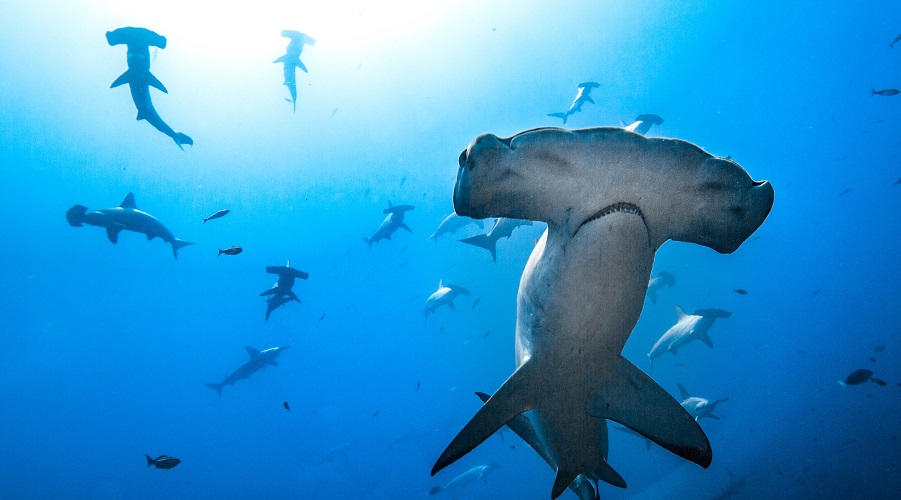
Sharks have persisted as powerful ocean predators for more than 400 million years. They survived five mass extinctions, diversifying into an amazing variety of forms and lifestyles. But this ancient lineage is now among the world’s most threatened species groups due to overexploitation in poorly regulated fisheries and the proliferation of wasteful finning practices.
Category: New Research
Large subsidized fleets operating in the Indian Ocean plunder fisheries resources crucial in food-insecure communities

Fishermen in Digha, India. Photo by Krishnendu Biswas, Pexels.
A few big players in the Indian Ocean Rim are disproportionately accessing the region’s fisheries resources through harmful subsidies while limiting the access to those resources of small-scale fleets from nutrient-insecure countries.
Tuna species popular in sashimi and poke bowls in sharp decline in the Indian Ocean

Yellowfin tuna. Photo by NOAA Fisheries West Coast, Flickr.
The yellowfin tuna commonly enjoyed in sashimi, poke bowls and salad sandwiches may soon disappear from these dishes if current overexploitation rates remain unchanged, especially in the Indian Ocean.
Once they have laid their eggs, fish become ‘young’ again

Herring spawn. Photo by Moosealope, Flickr.
The physical relief that temperate fish like cod and Atlantic herring experience after they spawn for the first time allows them to breathe in more oxygen and develop a voracious appetite, all of which leads to a rapid increase in body weight.
AI-powered data-limited stock assessment method more accurate than ‘gold standard’ in predicting sustainable fisheries catches

Fishers in Bagamoyo, Tanzania. Reference image by Rasheedhrasheed, Wikimedia Commons.
A recent update introduced to the CMSY methodology used to assess the status of fish stocks has proven to more accurately predict the catch that a population can support than highly-valued data-intensive models.
Continue reading