Belize: Too Precious To Drill

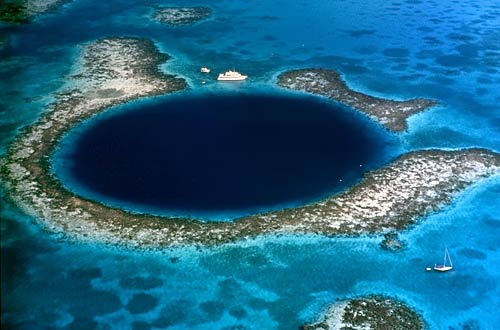
More than 20 top marine ecologists gathered last week in Belize City to review the status of the country’s marine biodiversity and the potential impacts an oil spill could have on local marine ecology. After the meeting, the participants unanimously agreed that the Belize government should prohibit offshore oil drillings in Belize’s waters, a referendum that will be voted on in late 2011.

Scientists from the University of British Columbia, Boston University, the American Museum of Natural History, the Smithsonian Institution, and Belize itself discussed Belize’s marine assets in a symposium titled: Too Precious for Oil: the Marine Biodiversity of Belize.

Among the scientists’ chief concerns were how an oil spill would affect the region’s biodiversity and economic gains from marine resources and tourism. Belize boasts bottlenose dolphins, the largest number of Antillean manatees in the world, a breeding ground for at least 7 different species of sharks and rays, hundreds of different types of sponges, and fisheries for groupers, snappers, grunts, and other reef fishes. In 1996, UNESCO declared the Belize Barrier Reef Reserve System a World Heritage Site.

Scientists are also worried that seismic activity makes drilling especially risky. An earthquake in Belize in 2009 had severe impacts on coral reefs. A spill could result in lost revenues to Belize’s fishing and marine tourism industries.

The event was organized by Oceana Belize and the Sea Around Us project, with funding from the Oak Foundation.
ended with the signing of a letter from all the scientists involved urging the government to consider the incredibly rich and diverse marine environment that exists in Belize, the many benefits (tourism and fisheries) this provides and the risk that oil drilling posses to this incredible natural asset.

The conference drew in around 100 people, but there was a media blitz each day and appearances on national radio, television, news and talk shows. Daniel Pauly made daily media appearances and met with the opposition party and other government officials. He and Sarah Harper appeared on two local talk shows. Andres Cisneros aired on Estereo Amour, Belize’s Spanish radio station.

Check back soon for more progress on this initiative.
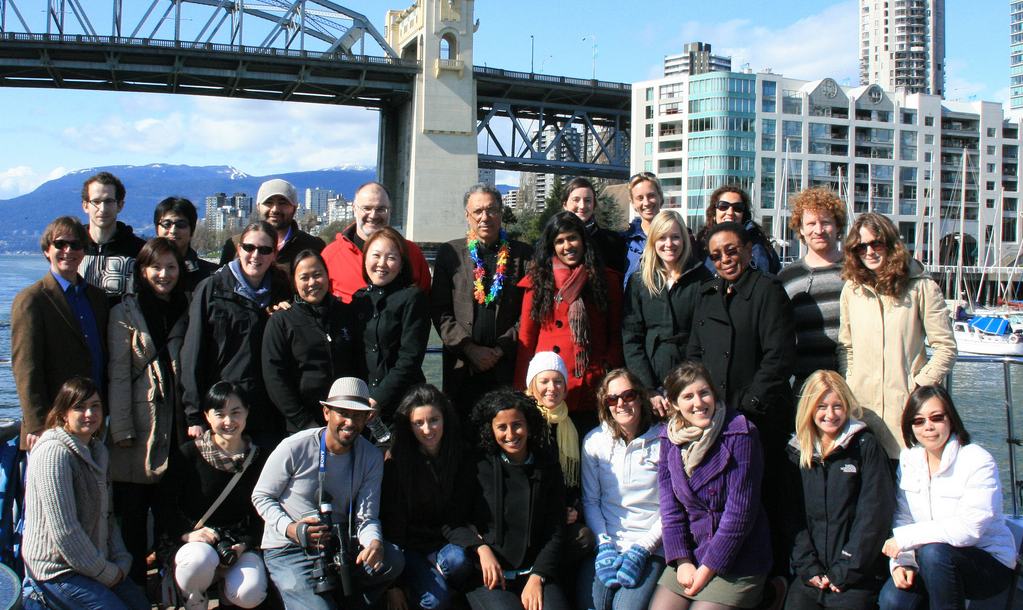
Daniel Pauly’s Surprise Sail on the Eloquent

Deng Palomares reports on the surprise birthday celebration in the newsletter and below:

Our birthday celebrant, Dr Pauly, was born in post-war Paris in May 1946 and to this day carries a French passport (though he wishes to be Canadian sometime in the future). But, he never really lived in Paris, because Daniel’s roller coaster life seems to always involve traveling. In his younger years, these travels were undertaken as a quest for meaning (which at certain points in his life included religion), purpose and education leading to a doctorate from the Institute für Meereskunde in Kiel, Germany. This degree started Daniel’s journey to far and distant lands, e.g., Indonesia (GTZ project), the Philippines (ICLARM, Manila), Peru and Tanzania (FAO/DANIDA training courses), New Caledonia, Trinidad and Tobago, Kenya and Namibia (FishBase training courses), to name a few. And finally, to Vancouver, where he had the permanent task of being an advisor to graduate students and leader of Sea Around Us team members since the mid-1990s. Still cranking out a long list of publications like a paper mill and still going places as an invited speaker, (the ‘guru’) Daniel, mentor to some of us and professor to many, had an aversion to celebrating his own birthday for some reason he never really identified. This earned him the name ‘KJ’ (for ‘Kill Joy’) among staff at ICLARM in the early days (because Filipinos like parties and especially the food!). We at the Fisheries Centre are lucky that Daniel now seems to enjoy these celebrations (remember his 60th with that big event?). And this year’s birthday (total surprise) bash for our bashful celebrant is unique, his first birthday party onboard a cruise! Daniel had no clue that preparations were under way for his party, thanks to the deft planning committee (Grace, Aylin), those who avidly put their art and cooking skills to work (Leah, Sarah, Kristin, Fred, Veronica) with special mention to Sandra Pauly who provided us with lunch, those who provided the materials for the artwork, the poems and baking paraphernalia, him who told Daniel lies to get him out of the office (Dirk), the photographers and film makers (Dawit, Dalal, Ling Huang) and to all of you who came to the party! It was well worth a sunny afternoon out on a boat, wasn’t it!

Sea Around Us Heads to IMCC2

Join the Sea Around Us and many of our collaborators at the International Marine Conservation Congress, May 14-18, 2011 in Victoria, BC. Find a few of our specific presentations below.

Sunday, May 15
10:15am (15 minutes)
Sarah Harper The fisheries of small island countries

11:05am (5 minutes)
Leah Biery Estimating the Global Distribution and Species Composition of the Shark Fin Supply from the Bottom Up

11:10am (5 minutes)
Rhona Govender Small but Mighty: the Real Contribution of Small-scale Fisheries to Global Catch

2:30pm (15 minutes)
Ashley Strub Global financial investment in marine protected areas

2:45pm (15 minutes)
Daniel Pauly Big reserves are better

4:50 (5 minutes)
Mark Hemmings Changes in Maldivian Fisheries

4:45pm (15 minutes)
Colette Wabnitz The ecological role of green turtles (Chelonia mydas) in Hawaiian and Caribbean marine ecosystems and implications for conservation

6pm (5 minutes)
Megan Bailey Do Europe’s Reduction Fisheries Contribute to Sustainability?

Monday, May 16
10:30am (15 minutes)
Vicky Lam Climate change and the economics of global fisheries

10:45am (15 minutes)
William Cheung Global changes in body size, distribution and productivity of marine fishes under climate change: implications for conservation

6:15pm (15 minutes)
Daniel Pauly (on behalf of Wilf Swartz) The spatial expansion of the world’s marine fisheries: 1950 to present

Tuesday, May 17
10:45am (15 minutes)
Michelle Paleczny Are global marine fisheries starving seabirds?

11am (15 minutes)
Marta Coll Spatial overlap between marine biodiversity, cumulative threats and marine reserves in the Mediterranean Sea

2:15pm (15 minutes)
Jennifer Jacquet Public vs. Personal Impressions of the Gulf Oil Spill

2:45pm (15 minutes)
Ashley McCrae-Strub Oil and fisheries in the Gulf of Mexico: potential impacts on catch

3pm (15 minutes)
Kristin Kleisner (on behalf of Rashid Sumaila) Impact of the Deepwater Horizon oil spill on the economics of U.S. Gulf fisheries

5pm (15 minutes)
Dirk Zeller Arctic fisheries catches in Russia, USA and Canada: Baselines for neglected ecosystems

5pm (15 minutes)
Frederic LeManach Magnitude of missing catches in official fisheries statistics and implications for the local population – the example of Madagascar

Wednesday, May 18
10:15 (15 minutes)
Jennifer Jacquet Intimacy through the Internet: Why Conservation Needs the Web

10:15 (15 minutes)
Sarika Cullis-Suzuki Regional fisheries management organizations: effectiveness and accountability on the high seas

10:45 (15 minutes)
Pablo Trujillo See-Food from Space

11:30 (15 minutes)
Kristin Kleisner Exploring indicators of fishing pressures in the context of the OHI with a focus on correcting the Marine Trophic Index for geographic expansion

3:30pm (15 minutes)
Dalal Al-Abdulrazzak Gaining Perspective on What We’ve Lost