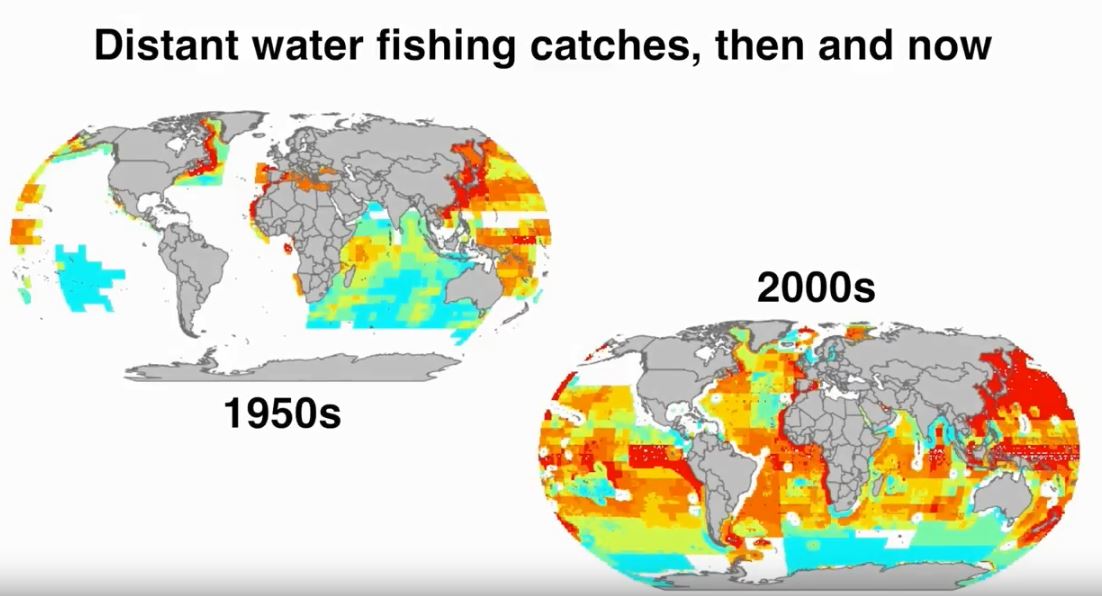
By combining fisheries data from the Sea Around Us initiative at UBC with country-level data on modern slavery, the researchers found that countries whose fleets rely heavily on government subsidies, fish far away from home ports, and fail to comprehensively report their actual catch, tend to fish beyond sustainable limits and are at higher risk of labour abuses.
Tag: Sea Around Us – Indian Ocean
Half of Russian catches in the Barents Sea thrown overboard
Russian fishing fleets operating in the Barents Sea dumped 42.7 million tonnes of good fish back into the ocean over the past 65 years according to new research. Thankfully, fishing practices have improved in recent years.
The study by researchers with the Sea Around Us at the University of British Columbia, and the Sea Around Us – Indian Ocean at the University of Western Australia, reveals that 55 per cent of the total catch taken by Russian fishers from the Barents Sea was discarded due to poor fishing practices and inadequate management.
Industrial fisheries’ expansion impacts 90 per cent of the global ocean, causes massive catch decline
By mapping the growth and spread of industrial fisheries using the Sea Around Us data, the researchers found that these global trends were dominated by the heavily subsidized fleets of a small number of countries that have increased the total area fished from 60 per cent to 90 per cent of the world’s oceans.
Want to have a big impact in marine conservation and global fisheries? Study with the new Sea Around Us – Indian Ocean
The Sea Around Us – Indian Ocean under the lead of Professor Dirk Zeller at the University of Western Australia is looking for outstanding PhD candidates interested in conducting ‘big-data’ and meta-analysis research on fisheries and fisheries conservation issues at the ocean-basin scale. If this is of interest to you, then consider applying for a PhD Scholarship at the University of Western Australia (UWA) in Perth. The mid-year 2018 round for domestic (Australian) candidates opens from 1 June 2018 until 13 July 2018, while the international candidates only round 1 for 2019 opens from 2 July 2018 until 31 August 2018. Please only apply after consultation with Professor Zeller.
Shareable catch reconstructions vid
Catch reconstructions are not always easy to explain to non-scientists.
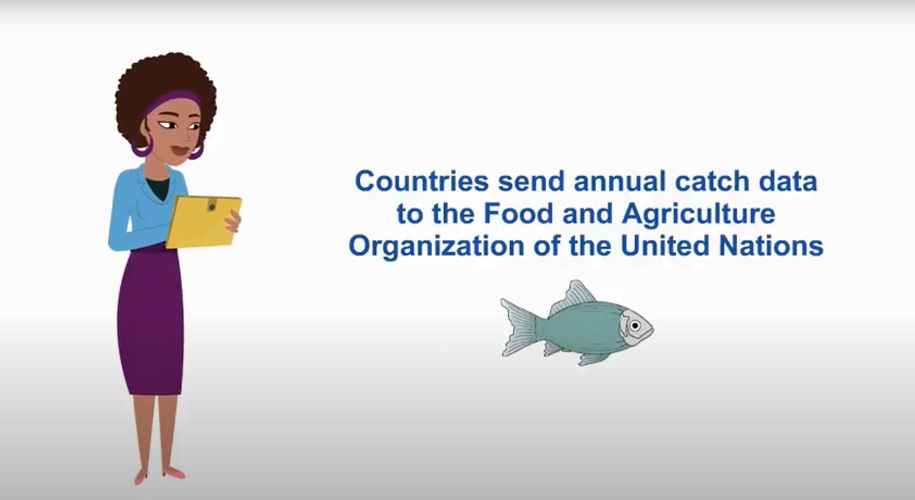
How did the Sea Around Us find out that overfishing has caused a steady decline in catches since the mid-1990s? What sources did researchers use? What’s the difference between officially reported figures and the Sea Around Us’ numbers?
More accurate data substantially improves fisheries monitoring and, in return, better monitoring generates better data. The overall result would be a greater protection to global fish stocks.
This is how we get #BetterData