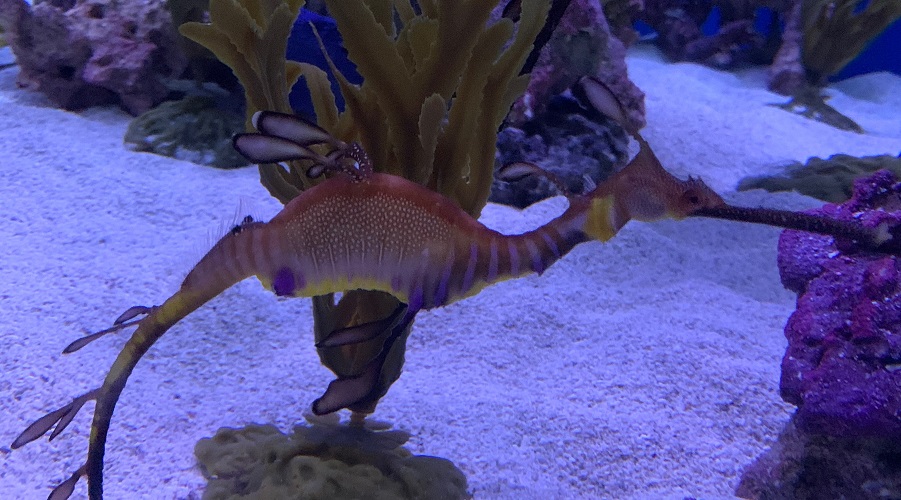
Common seadragon. Photo by Melanie Warren.
Despite their odd shape, which makes them resemble a tuft of seaweed, common and leafy seadragons grow in the same fashion as other bony fish, new research has found.

Common seadragon. Photo by Melanie Warren.
Despite their odd shape, which makes them resemble a tuft of seaweed, common and leafy seadragons grow in the same fashion as other bony fish, new research has found.

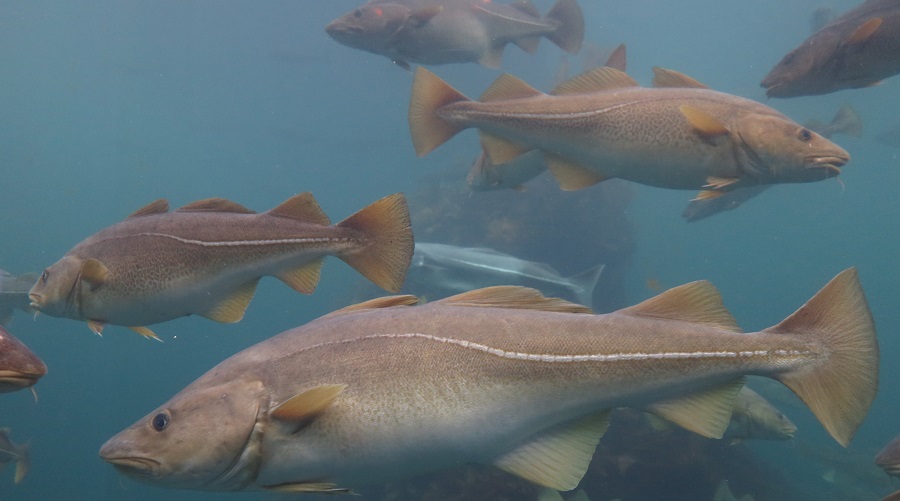
Atlantic cod (Gadus morhua) is among the fish species maturing and spawning earlier in the “spring” reproductive season, due to higher water temperature. Photo by GRID-Arendal, Flickr.
Fisheries managers and researchers may now predict how early fish will spawn in response to warming waters due to climate change, both in the oceans and in freshwaters.

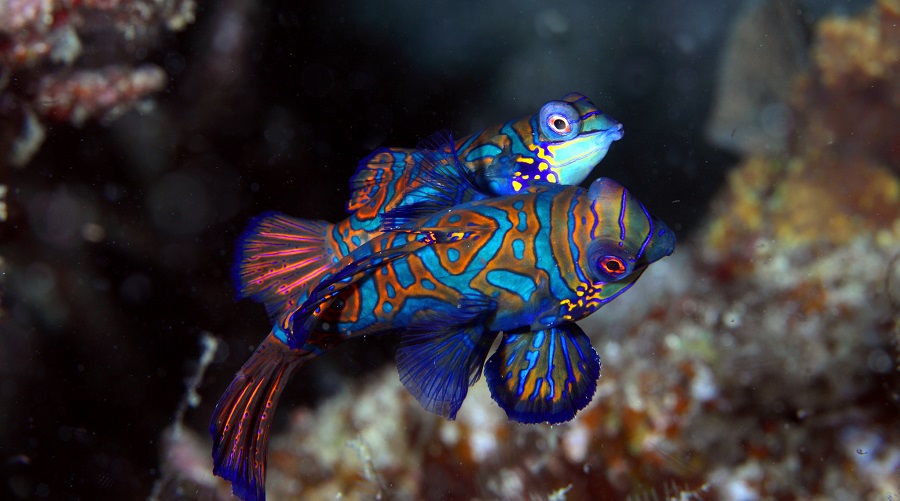
Mandarin fish mating. Image by Klaus Stiefel, Flickr.
Discounting anthropogenic-induced changes, the seasonally oscillating environments where long-lived fish hatch and grow remain more or less the same throughout the course of their lives. This means that the common explanation that states that fish become sexually active – or spawn for the first time – after experiencing certain environmental stimuli does not properly explain this phenomenon.

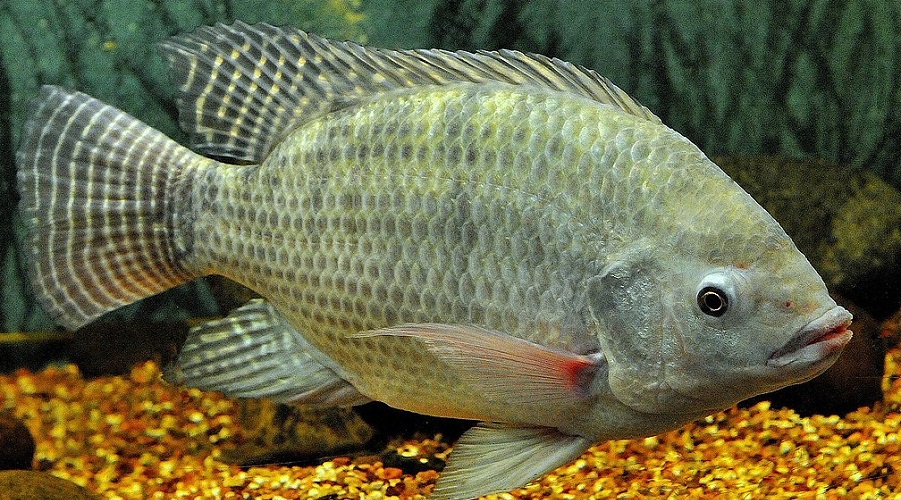
Nile tilapia. Photo by Germano Roberto Schüür, Wikimedia Commons.
Tilapias living in crowded aquaculture ponds or small freshwater reservoirs adapt so well to these stressful environments that they stop growing and reproduce at a smaller size than their stress-free counterparts.

Fish gills. Image by 2427999, Pixabay.
The distribution and concentration of dissolved oxygen and water temperature in the oceans and freshwaters are usually far more influential in shaping the growth and reproduction of fish than the distribution of their prey.
In a new paper in Science Advances, Daniel Pauly, principal investigator of the Sea Around Us initiative at UBC’s Institute for the Oceans and Fisheries, argues that scientists need to avoid attaching human attributes to fish and start looking at their unique biology and constraints through a different lens.