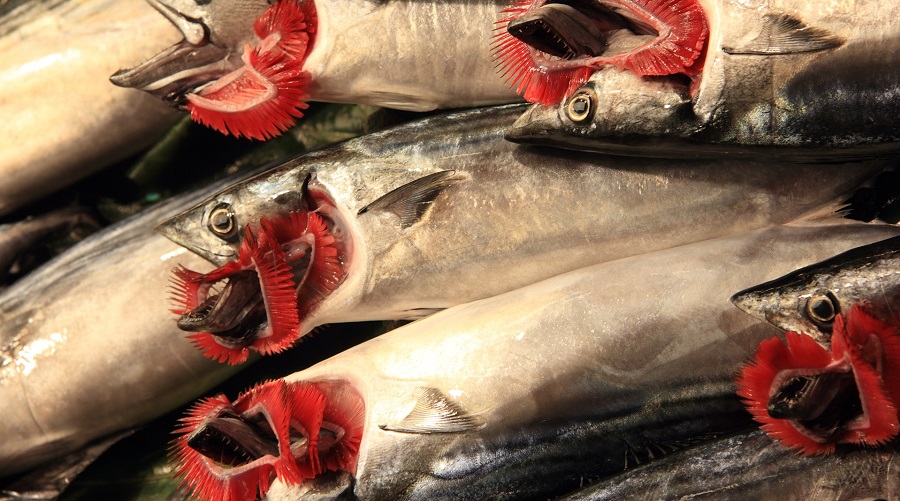
Recreational fisher at Baker Beach, California. Photo by mgstanton, Flickr.
Despite being the leading country when it comes to transparency, public accessibility, and free availability of fisheries data, the United States of America’s lack of international reporting of recreational catches and fish discarded at sea may hinder proper ecosystem-based management efforts, new research has found. Continue reading →
To mark World Oceans Day 2021, the Sea Around Us team took on a challenge presented by NGO Mundus Maris and decided to think about one of the many problems our oceans are facing and reflect on the efforts being made to address the issue at hand.
This is how the above video came to be.
Since fisheries are at the centre of our work, we wanted to shed light on how reinterpretations of the Maximum Sustainable Yield model developed in 1954 by M.B. Schaefer are encouraging fishing practices that decimate fish populations.
But if kept in its original format and when combined with recently developed computer-intensive stock assessment methods, the Schaefer model has been identified – both in the literature and in the video – as a viable mechanism for effective ecosystem-based fisheries management.
The distribution and concentration of dissolved oxygen and water temperature in the oceans and freshwaters are usually far more influential in shaping the growth and reproduction of fish than the distribution of their prey.
In a new paper in Science Advances, Daniel Pauly, principal investigator of the Sea Around Us initiative at UBC’s Institute for the Oceans and Fisheries, argues that scientists need to avoid attaching human attributes to fish and start looking at their unique biology and constraints through a different lens.
According to the Institute for Fisheries Resources, this day has been celebrated since November 21st, 1997, when the World Fisheries Forum (WFF) was officially established in New Delhi, India. This non-profit organization is now known as the World Forum of Fish Harvesters and Fishworkers.
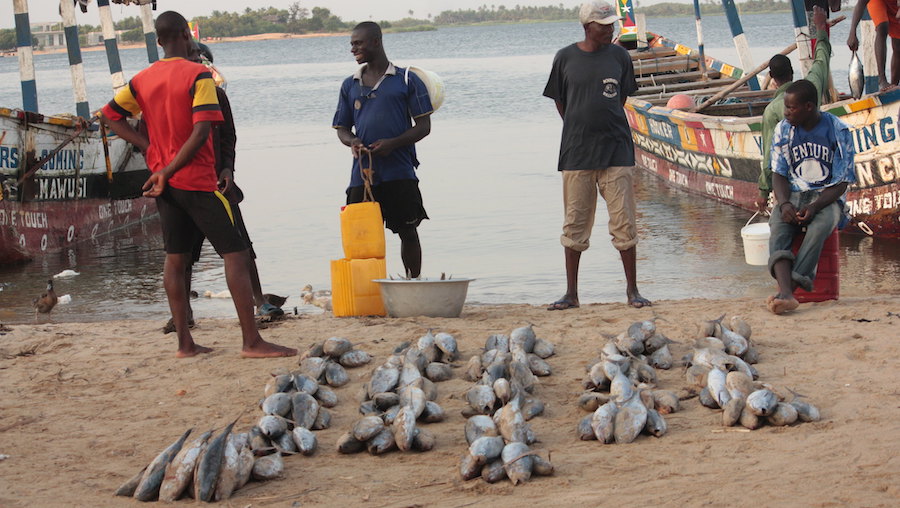
Fishing in Ada Foah, Ghana. Photo by jrwebbe, Flickr.
The food and nutrient security of billions of people worldwide depend on fish being treated as a domestic public health asset instead of a commodity.
A new paper by researchers with the Sea Around Us – Indian Ocean initiative at the University of Western Australia and the Sea Around Us global initiative at the University of British Columbia reviews evidence to back the urgent need to develop health- and nutrition-focused fisheries policies that drift away from current export-oriented, profit-maximizing policies.