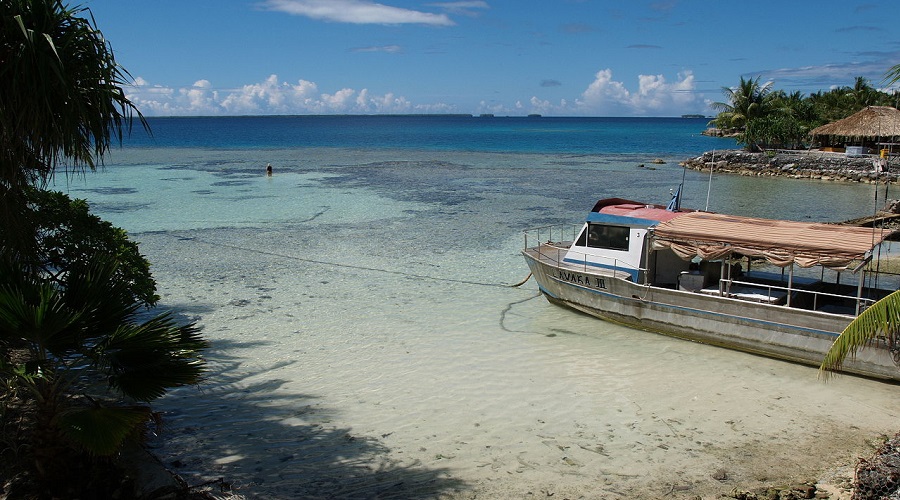
Nukunonu Lagoon in Tokelau. Photo by CloudSurfer, Wikimedia Commons.

Fishing pressure and climate change challenge Tokelau’s food security

Nukunonu Lagoon in Tokelau. Photo by CloudSurfer, Wikimedia Commons.

Nukunonu Lagoon in Tokelau. Photo by CloudSurfer, Wikimedia Commons.

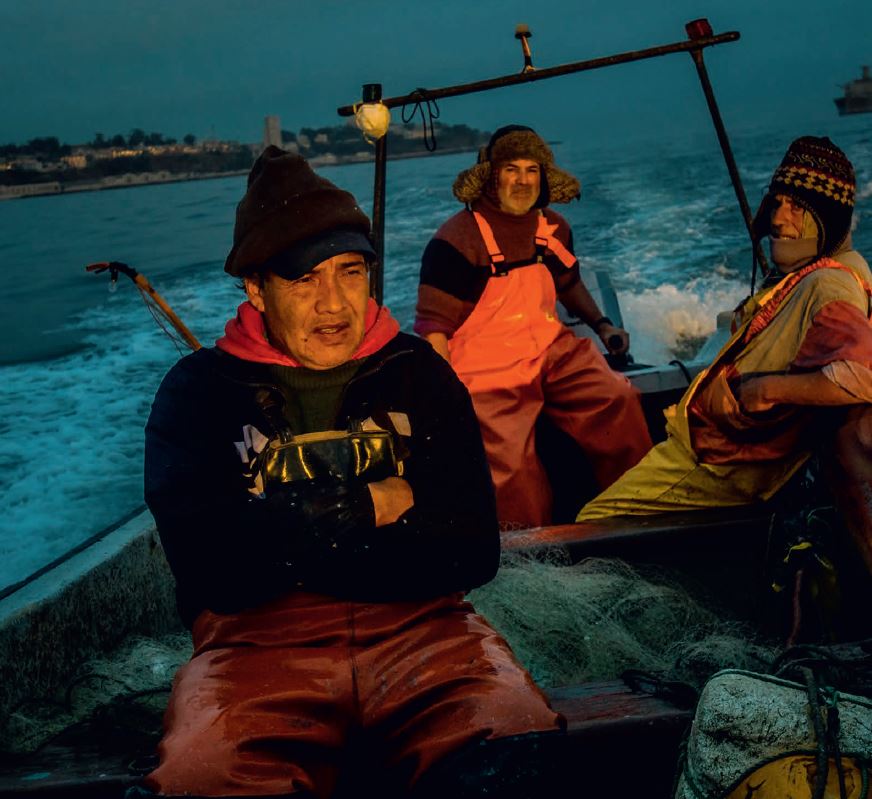
Tokelau’s fish-dependent population may be at risk of seeing its main source of locally available animal protein dramatically reduced if the amounts and species of fish caught by local fishers in their waters stay the same or increase.

According to a study by researchers with the Sea Around Us initiative at the University of British Columbia and the Sea Around Us – Indian Ocean at the University of Western Australia, a small-scale, commercial or artisanal fishery that has been growing since it began in the early 2000s, combined with an expanding foreign industrial fishery that catches most of the offshore fish in the territory’s exclusive economic zone, may threaten people’s access to fresh seafood.
Continue reading

Photo by WWF.

Nothing natural about nature’s steep decline: WWF report reveals staggering extent of human impact, including that of fisheries, on planet

Photo by WWF.

Photo by WWF.

Humanity and the way we feed, fuel and finance our societies and economies are pushing nature and the services that power and sustain us to the brink, according to WWF’s Living Planet Report 2018. The report, released today, presents a sobering picture of the impact of human activity on the world’s wildlife, forests, oceans, rivers and climate, underlining the rapidly closing window for action and the urgent need for the global community to collectively rethink and redefine how we value, protect and restore nature.

The Living Planet Report 2018 presents a comprehensive overview of the state of our natural world, twenty years after the flagship report was first published. Through indicators such as the Living Planet Index (LPI) provided by the Zoological Society of London, the Species Habitat Index (SHI), the IUCN Red List Index (RLI), the Biodiversity Intactness Index (BII) and the Sea Around Us fisheries data, as well as Planetary Boundaries and the Ecological Footprint, the report paints a singular disturbing picture: human activity is pushing the planet’s natural systems that support life on earth to the edge.

Continue reading

Dr. Deng Palomares. Photo by Valentina Ruiz Leotaud.

Frontiers awards the Sea Around Us Project Manager

Dr. Deng Palomares. Photo by Valentina Ruiz Leotaud.

Dr. Deng Palomares. Photo by Valentina Ruiz Leotaud.

The Sea Around Us Project Manager, Dr. Deng Palomares, received an award that praises her efforts as Specialty Chief Editor for Frontiers in Marine Science.

Granted by the journal’s Community Support Fund, the award acts as a positive acknowledgment of the impact of Dr. Palomares’ initiative to maintain a vibrant Marine Fisheries and Aquaculture section, as well as of her incessant work in encouraging scientists to submit their papers and boosting the overall growth of Frontiers.

Continue reading

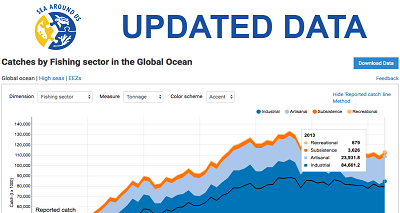
Catches global

Pauly and Zeller explain the making of the Sea Around Us database

via GIPHY
 

The Sea Around Us’ Daniel Pauly and Dirk Zeller have just added a new publication to their long list of items in the literature. In this case, it is a chapter in the recently published book World Seas: An environmental evaluation. Vol. III: Ecological issues and environmental impacts, edited by Charles Sheppard.

In “The making of a global marine fisheries catch database for policy development,” Pauly and Zeller give a detailed account of the process of creating the Sea Around Us’ global catch database that builds on and addresses the deficiencies of the database created and maintained by the Food and Agriculture Organization of the United Nations.

Continue reading

Photo by Naka9707, Wikimedia Commons, CC BY-SA 4.0.

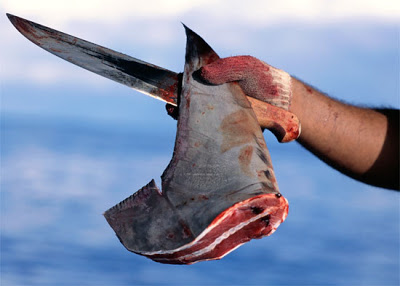
Appetite for luxurious shark fin soup drives massive shark populations decline

Photo by Naka9707, Wikimedia Commons, CC BY-SA 4.0.

Photo by Naka9707, Wikimedia Commons, CC BY-SA 4.0.

Populations of some shark species such as hammerhead and oceanic whitetip have declined by over 90 per cent in recent years largely because of wealthy consumers’ growing appetite for fin soup, a new paper in Marine Policy states.

The study by researchers from the University of Hong Kong, the Sea Around Us initiative at the University of British Columbia and WildAid Hong Kong, reveals that since fishing pressure on threatened shark populations has increased dramatically in recent years, it is urgent for consumers to stop demanding shark fin products.

Continue reading