

 In late January, Dr. Daniel Pauly traveled to Portugal to accept an honorary doctorate from the University of the Algarve. He was honored alongside Dr. Emygdio Landerset Cadima and gave a lecture following Dr. Sidney Holt. Listen to Dr. Pauly’s lecture here.
Category: New & Notable
September/October 2009 Newsletter
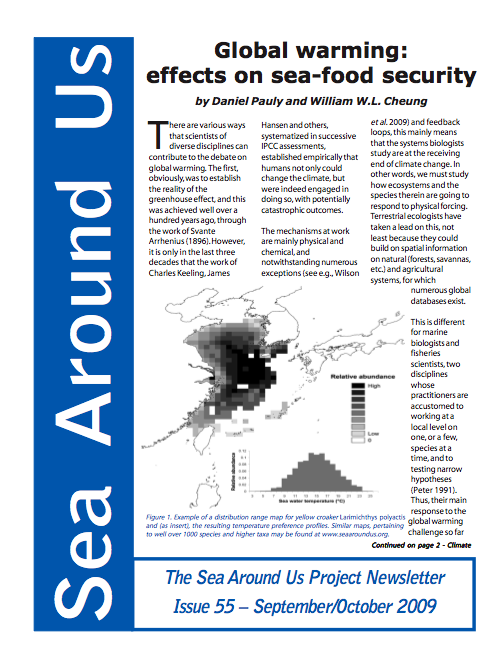 Read about the effects of global warming on seafood security, the vaquita and shrimp trawlers in Mexico, and what it’s like to do a M.Sc. at the Fisheries Cetnre in the latest Sea Around Us newsletter here.
Sea Around Us Heads to AAAS
 This week, several members of the Sea Around Us Project head off to the 2010 meeting of the American Association of the Advancement of Science (AAAS) in San Diego, California. On Saturday, Daniel Pauly is a speaker on the panel Denial, Detente, and Decisions: Fisheries Science at the Crossroads. Also that day, Villy Christensen has co-organized a panel titled Bridging Science and Society for Sustainability: The Role of Visualization, where Sherman Lai will be speaking. Jennifer Jacquet has organized and will speak on the panel Preserving the Global Commons Through Conservation and Cooperation on Sunday. We look forward to reporting back on the results of this big event.
MEY=MSY
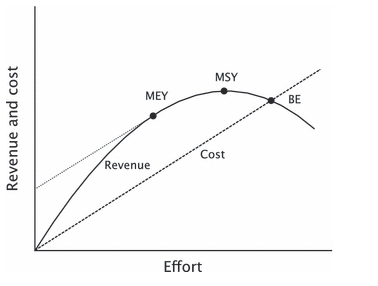 When one considers all the extra value generated in a fishery such as processing, distribution and marketing of fish products, higher fisheries quotas make more sense, according to a new paper titled MEY=MSY by Villy Christensen published in Fish and Fisheries. For more than 50 years, it has been generally accepted that the fishing sector stood to gain from managing fisheries at the effort level producing maximum economic yield (MEY) rather than maximum sustainable yield (MSY), which occurs at a higher effort level. “If operating at the lower MEY level would result in so much higher profit to the individual boats and to the fishing sector while maintaining catches nearly at MSY why don’t they?” asks Christensen in the paper. He explains that MEY was built on the assumption that only the revenue and cost structure for the fishing fleet were considered. Christensen points out that when processing, distribution and marketing of fish products are taken into account, there are more profits to be gained, which in turn makes MSY — and a higher fishing effort — the more appropriate target for fisheries.
July/August 2009 Newsletter
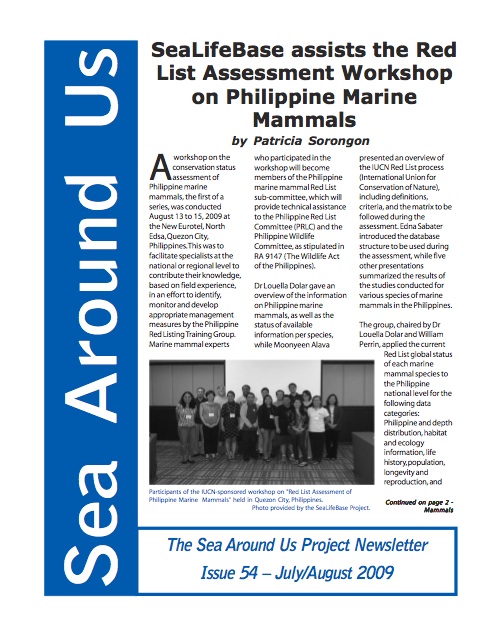 Read about new applications using SeaLifeBase and FishBase among other things in the latest Sea Around Us newsletter here.