Chinese foreign fisheries catch 12 times more than reported

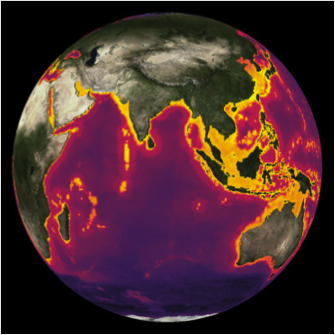
China DWF mapChinese fishing boats catch about US$11.5 billion worth of fish from beyond their country’s own waters each year – and most of it goes unreported – this is according to a new paper led by the Sea Around Us Project, published in the journal Fish and Fisheries.

The study estimates that China’s catch in foreign waters is about 12 times greater than what the country reports to the United Nation’s Food and Agriculture Organization, an international agency that keeps track of global fisheries catches.

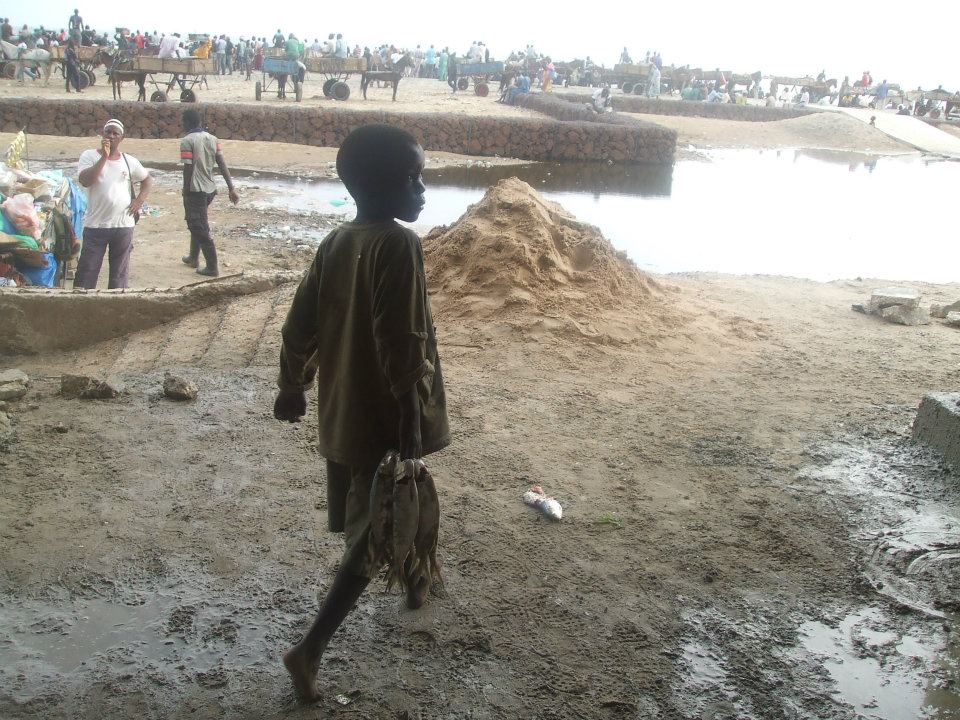
Much of the fishing occurs off the coast of West Africa.

You can read more about the findings at Nature, “Detective work uncovers under-reported overfishing.”

See the scientific article, published in Fish and Fisheries, here (open access).

And get the press release and associated materials, including a map illustrating where and how much Chinese vessels currently fish beyond their own waters.

On using catches to predict abundance

Factions among the fisheries community disagree on whether catch data – the amount of fish drawn from the sea – can be used to assess the health of fish stocks. In a comment piece published in Nature today, the Sea Around Us Project’s Principal Investigator Daniel Pauly shares his views, emphasizing that catch data are often the only type of data we have to tell anything about the status of fisheries.

While developed countries such as the US, Australia and those in Europe are able to use a variety of data, such as size, growth and migration information, as well as survey data, to conduct expert stock assessments, Pauly points out that these come at a cost: anywhere from US$50,000 to millions of dollars per stock. Such costs are not feasible for the majority of developing countries. Furthermore, for 80% of maritime countries, catch is the only data available.

In a second comment piece, Ray Hilborn and Trevor Branch from the School of Aquatic and Fishery Sciences, University of Washington, argue that there are other factors beyond the health of a fish stock that can account for changes in catch. Used on their own, catch data can create confusion and alarm about the abundance of fish stocks, they say.

Pauly agrees that catch data should be used with caution, but adds there is danger in undermining the value of this information. In most countries, the amount of fish caught is the only information available to assess stock health. “If resource-starved governments in developing countries come to think that catch data are of limited use, the world will not see more stock assessments; catch data will just stop being collected,” says Pauly.

The Sea Around Us Project, under the guidance of Pauly, is currently conducting a global evaluation of catch data, from 1950 to present, collated by the Food and Agriculture Organization (FAO) of the United Nations. Results so far reveal that many countries have underreported their catches. The extent of the underreporting is larger in developing countries (about 100-500%; Zeller et al. 2007) than in developed ones (30-50%; Zeller et al. 2011).

To see the full article, please go online to Nature.com: Pauly D (2013) Comment: Does catch reflect abundance? Yes, it is a crucial signal. Nature 494: 303-305.

Zeller D, Booth S, Davis G and Pauly D (2007) Re-estimation of small-scale fisheries catches for U.S. flag island areas in the Western Pacific: The last 50 years. Fishery Bulletin 105: 266-277.

Zeller D, Rossing P, Harper S, Persson L, Booth S and Pauly D (2011) The Baltic Sea: estimates of total fisheries removals 1950-2007. Fisheries Research 108: 356-363.

Jellyfish in the Mediterranean

Jellyfish (Cotylorhiza tuberculata) with juvenile fish near Hvar Island, Croatia. (Photo © Tihomir Makovec)

A new journal article from the Sea Around Us Project reviews knowledge of jellyfish in the Mediterranean Sea, including how the abundance of a number of native and invasive species has changed over time, and what could be causing the changes. In addition, the authors offer advice on how to manage jellyfish blooms – a challenge given the high levels of uncertainty and variability.

Lucas Brotz, a PhD student supervised by Dr Daniel Pauly, is the lead author on the paper, which is published in Acta Adriatica.

You can access the paper here.

Brotz L and Pauly D (2012) Jellyfish populations in the Mediterranean Sea. Acta Adriatica 53(2): 211-230.

Sea Around Us contributes to one of Smithsonian Magazine’s Top 10 Ocean Stories of 2012

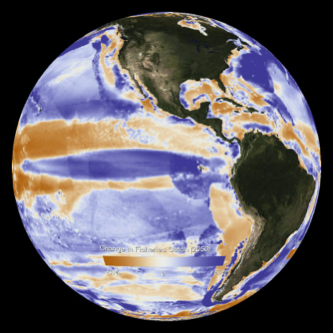
The Ocean Health Index is the first global quantitative assessment of ocean health (Map credit: Halpern, et al, Nature)

In 2012, Kristin Kleisner, Dirk Zeller, Rashid Sumaila and Daniel Pauly with the Sea Around Us Project were part of an international team that undertook the first global comprehensive assessment of ocean health – and gave it a passing grade of 60 out of 100.

This achievement – the first “grading” of ocean health – has been recognized as one of the top 10 ocean stories of 2012! You can read more about this research and the other top ocean stories highlighted by Smithsonian Magazine here.

Find out more about the Ocean Health Index at this website and see the paper published in Nature.

New database of marine aquaculture launched

The new Global Mariculture Database (GMD), released by the Sea Around Us Project, offers detailed information on the where and what of mariculture around the world since 1950. By mapping the production of marine aquaculture at smaller scales than the usual national scale and by digging deeper into the species being farmed, the GMD provides room for new insights into marine aquaculture.  And all of this information is now available online for anyone to browse on the Sea Around Us Project website!

The GMD confirms reports by the Food and Agriculture Organization of the UN (FAO) that the amount of seafood produced by marine aquaculture has tripled since 1950 – a massive increase. During this time, there has also been a shift in the type of seafood produced globally, with a larger percentage of predatory species, such as salmon and tuna, farmed around the world today compared to 1950. In the past, the relative production of species lower on the food chain, like mussels and oysters, was higher. This phenomenon has been described as “farming up the food web” a term derived from the concept of fishing down marine food webs.

In keeping with the Sea Around Us Project’s goal of improving public access to global fisheries and aquaculture information, this Global Mariculture Database (GMD) is freely available online at www.seaaroundus.org.

To find out more about the GMD and how it was created, you can read the paper recently published in the journal Marine Policy:

Campbell B and Pauly D (2012) Mariculture: a global analysis of production trends since 1950. Marine Policy 39: 94-100.