Sea Around Us study finds 30 per cent of global fish catch is unreported

Fish basket on head
Countries drastically underreport the number of fish caught worldwide, and the numbers obscure a significant decline in the total catch .

The new estimate, released today in Nature Communications, puts the annual global catch at roughly 109 million metric tons, about 30 per cent higher than the 77 million officially reported in 2010 by more than 200 countries and territories. This means that 32 million metric tons of fish goes unreported every year, more than the weight of the entire population of the United States.

Researchers led by the Sea Around Us, a research initiative at the University of British Columbia supported by The Pew Charitable Trusts, and Vulcan Inc., attribute the discrepancy to the fact that most countries focus their data collection efforts on industrial fishing and largely exclude difficult-to-track categories such as artisanal, subsistence, and illegal fishing, as well as discarded fish. Continue reading

New research reveals population trends for world seabirds

RHAU Donnecke(1)

A Rhinoceros Auklet (seabird) eating sandlance (Photo: Daniel Donnecke)

New Sea Around Us research has found drastic decline in the monitored portion of the global seabird population.

The paper, published in PLoS ONE, reports that the monitored portion of the global seabird population decreased overall by 69.7 per cent between 1950 and 2010.

According to Michelle Paleczny, a lead author of the paper, and recent graduate of the zoology program at UBC, these findings likely reflect a global trend because of the large and representative sample. A decline this drastic can cause changes in island and marine ecosystems in which seabirds play a variety of vital roles.

“Decline in seabird abundance stands to disrupt natural processes in island and marine ecosystems in which seabirds play an important role — by acting as predators, scavengers, cross-ecosystem nutrient subsidizers, and ecosystem engineers,” Paleczny says.

In order to investigate global patterns of seabird population data, the researchers assembled a global database of seabird population size records and applied multivariate autoregressive state-space (MARSS) modeling to estimate the global path of all seabird populations with sufficient data. They obtained data from primary sources including journal articles, books, and unpublished reports.

Several human activities are known to threaten seabird populations, including entanglement in fishing gear, overfishing of food sources, climate change, pollution, disturbance, direct exploitation, development, energy production, and introduced species. Seabird populations are strongly affected by threats to marine and coastal ecosystems, and can indicate  the status of marine ecosystem health.

“Knowing this information helps us to measure and assess the overall effect that human activities and threats have had on seabirds and marine ecosystems over time,” Paleczny explains.

You can read the full report here

New data on reported and unreported marine catches now available online

Researchers with UBC’s Sea Around Us project have launched a new web platform at www.seaaroundus.org that provides the first comprehensive coverage of both reported and unreported fish caught by every country in the world.

It reveals that official catch reports considerably underestimate actual catches around the world. For example, researchers found there was considerable unreported foreign fishing between 1950 and the early 1970s on Canada’s East coast. In fact, more than half of fish caught were unreported at one point. Much of this ‘catch’ consisted of so-called discards.

UBC professor Daniel Pauly and Dirk Zeller plan to publish a global estimate of fisheries catch in a peer-reviewed paper.

“The new Sea Around Us data have significant global scope and are long awaited by many groups worldwide,” said Zeller, senior researcher and project manager for Sea Around Us. “Accurate estimates are important for policy makers and fisheries managers to make economical and sustainable decisions about our fishing policies and fisheries management.”

The new data combine estimates of unreported catches — determined through extensive literature searches, consultation with local experts, and calculation of discarded fish — with officially reported data for small and large-scale fisheries for every country. The data emerged from a decade-long catch reconstruction project.

“We know these data will have major global impacts and now they are accessible in a visual, simplified and comprehensive way,” Pauly said.

Accurate catch data provide important insights into fisheries, fish populations and underlying ecosystems, and such data can have economic impacts.

The Sea Around Us is currently funded by The Paul G. Allen Family Foundation. This is the first time the project has released new data in over five years. It can be accessed at www.seaaroundus.org

BACKGROUND

About UBC’S Sea Around Us
The Sea Around Us was initiated in 1999, and aims to provide integrated analyses of the impacts of fisheries on marine ecosystems, and to devise policies that can mitigate and reverse harmful trends while ensuring the social and economic benefits of sustainable fisheries. Sea Around Us has assembled global databases of catches, distributions of fished marine species, countries’ fishing access agreements, ex-vessel prices, marine protected areas and other data – all available online.

Sea Around Us is a long-standing collaboration between the University of British
Columbia and The Pew Charitable Trusts, and since 2014 is supported by The Paul G. Allen Family Foundation.

About The Paul G. Allen Family Foundation
Founded in 1988, the Paul G. Allen Family Foundation is dedicated to transforming lives and strengthening communities by fostering innovation, creating knowledge and promoting social progress. The Sea Around Us program is another example of how the Foundation supports the use data and technology to inform conservation priorities and actions.

View this press release on UBC News here

Study finds fish catches in Panama vastly under-reported

New Sea Around Us research estimates Panama’s total fish catches were vastly under-reported — by almost 40 per cent — between 1950 and 2010.

The recent study, led by Sea Around Us’ Sarah Harper and co-authored by Kyrstn Zylich, Dirk Zeller and  Smithsonian Tropical Research Institute’s Héctor Guzmán, was published in Marine Fisheries Review’s most recent issue.

IMG_3643

Panamanian artisanal fisher cleaning his daily catch

The research not only found a high number of fish — including tuna, shellfish and shark — taken from Panama’s waters was unaccounted for, but it also revealed data deficiencies.

“Fisheries catch data collection, as is the case in many countries, focus mainly on large-scale operations and the commercial sector under the assumption that small-scale fisheries are insignificant,” Harper said. “This catch reconstruction highlights the substantial under-reporting of small-scale catches.”

Other major components missing from official Panamanian data include discarded bycatch, which is often overlooked but can be considerable, according to Harper. Poor fisheries monitoring, data collection and lack of human resources to spot errors also contribute to data deficiencies.

Accurate catch accounts are important to the national economy, especially in Panama, where fish like lobster and shrimp are major exports.

“Given the important economic and food security contributions of Panama’s fisheries, efforts must be made by fisheries governing bodies to improve catch data collection and reporting,” Harper said.

senegal

Breaking ground on illegal fishing in Senegal

senegal

Photo credit: Dyhia Belhabib


One of our PhD students Dyhia Belhabib headed a study that revealed catch numbers in Senegal have been misreported largely due to high levels of illegal fishing.

Belhabib’s research —a joint project with Sea Around Us and US Agency for International Development— found that the number of industrial catches is vastly underestimated.  She worked with the DPM, World Wildlife Fund and data from the U.S. Navy, in the study that began in March 2012. It was published earlier this month.

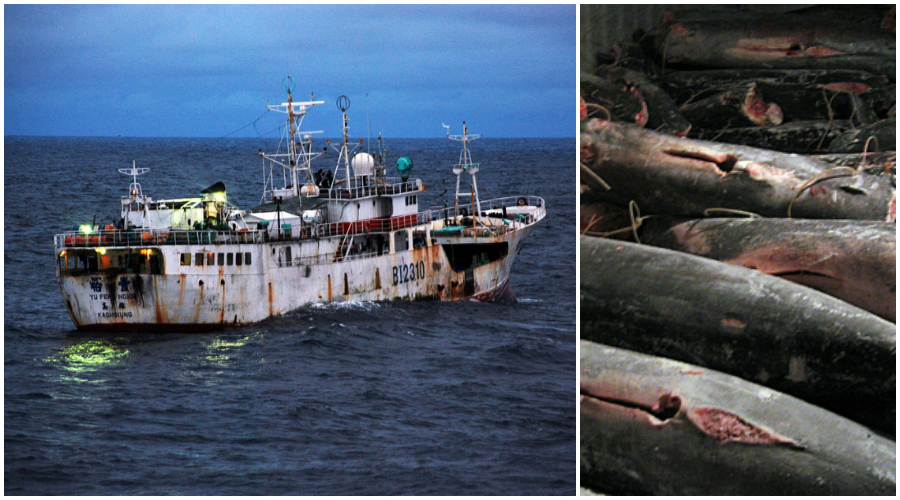
In effect, the study has increased Senegal’s awareness of illegal fishing vessels. Earlier this month, they arrested members of an illegal Russian vessel for fishing in Senegalese waters.

Belhabib’s report stated that official reports and fishers’ accounts document the presence of illegal vessels—which are thought to be a major cause of problems for Senegalese artisanal fisheries.

Belhabib noted that artisanal fisheries have increased in both time and space.

“They go out more often and travel further away,” she said.  “It’s been undetected for years.”

Senegalese artisanal fishing numbers have been reported at 80 per cent, but Belhabib’s research discovered the numbers are closer to half artisanal fishing and half industrial.

She stressed the importance of the findings, as they’ll help fishery decision-makers make more informed policy choices.

“These findings can help solve the problems of over-capacity in Senegalese waters,” she said.


You can read more about the study here:

http://www.sciencedirect.com/science/article/pii/S0165783613003007

See press on illegal fishing in Senegal here: 

http://www.bbc.co.uk/news/world-africa-25621864

http://www.bbc.co.uk/news/world-africa-25859387