

 Daniel Pauly recently gave the keynote address at the 2010 Seafood Summit in Paris. His talk compared industrial fishing to a Ponzi scheme, where instead of extracting a sustainable interest from invested capital, we use up the capital itself, and hope for other ‘investors’. He discussed the three-way expansion of fishing through the 20th century: geographically, by fishing in distant waters and getting access to African, Caribbean and Pacific waters; by fishing in deeper and deeper waters; and a taxonomic expansion. Pauly then addressed aquaculture and its limitations, particularly the double accounting of carnivorous farmed fish. He finished by talking about conservation efforts and the need to include the small-scale fisheries in the developing world in conservation efforts. His full talk is available through the Seafood Summit website.
Category: Contact
UBC End of the Line Screening with Pauly & Sumaila
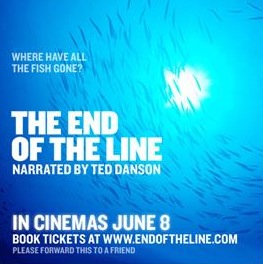 UBC will host a screening of The End of the Line on Wednesday, January 13th from 4:00 pm – 7:00 pm in the Multipurpose Room at the Liu Institute for Global Issues. Please join us for a film screening and discussion, featuring the Sea Around Us Project’s Daniel Pauly and Rashid Sumaila. Register for the event here. Co-hosted by UBC’s Liu Institute for Global Issues and Fisheries Centre.
2009 blog posts
Sumaila Asked to WTO and British House of Commons
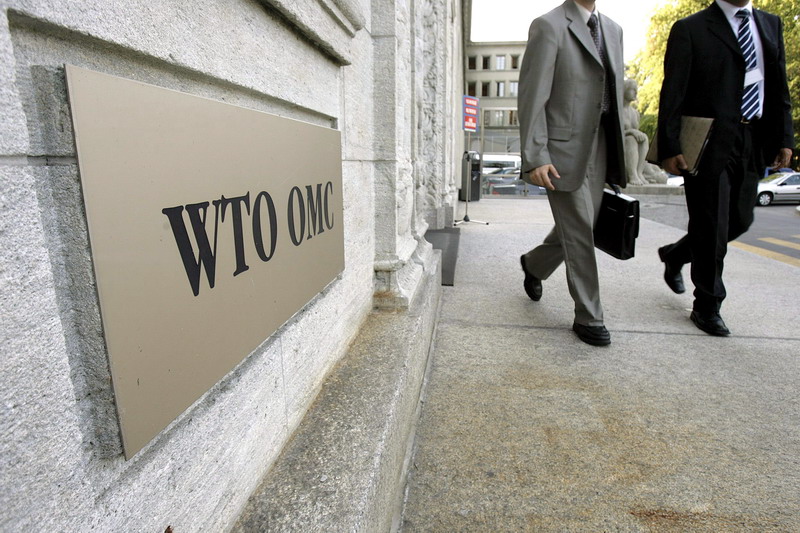 At the end of October, the Sea Around Us Project’s economist and director of the Fisheries Economics Research Unit Rashid Sumaila teamed up with Oceana spokesperson Ted Danson to meet with WTO Director-General Pascal Lamy to discuss the most recent estimates of global fisheries subsidies and the current state of WTO negotiations on this issue. The Economist reported on the fisheries subsidies discussion, particularly fuel subsidies here.
Global fisheries subsidies are estimated to be $25-$30 billion a year and encourage overfishing as well as undermine free market philosophy. The current Doha Round of the WTO is an apt forum for discussing and disciplining harmful subsidies, estimated at $16 billion per year.
From the WTO meetings in Geneva, Switzerland, Sumaila traveled to London to the British House of Commons for another meeting between legislators and scientists. The Marine Advisory Group of GLOBE International, a group that supports political leadership on issues of environmental sustainability, gathered to discuss overfishing.
Sumaila found the legislators involved, a multipartisan group primarily from the UK, to be enthusiastic, particularly the MP from the same region as author/journalist Charles Clover. According to Sumaila, the legislators were very keen on receiving scientific information and data and urged the scientific advisors involved to share their findings candidly.
The Marine Advisory Group will continue to work with Globe International to produce a policy document, which should be completed early 2010, to be taken back to member countries, and presented at a number of UN meetings next year.
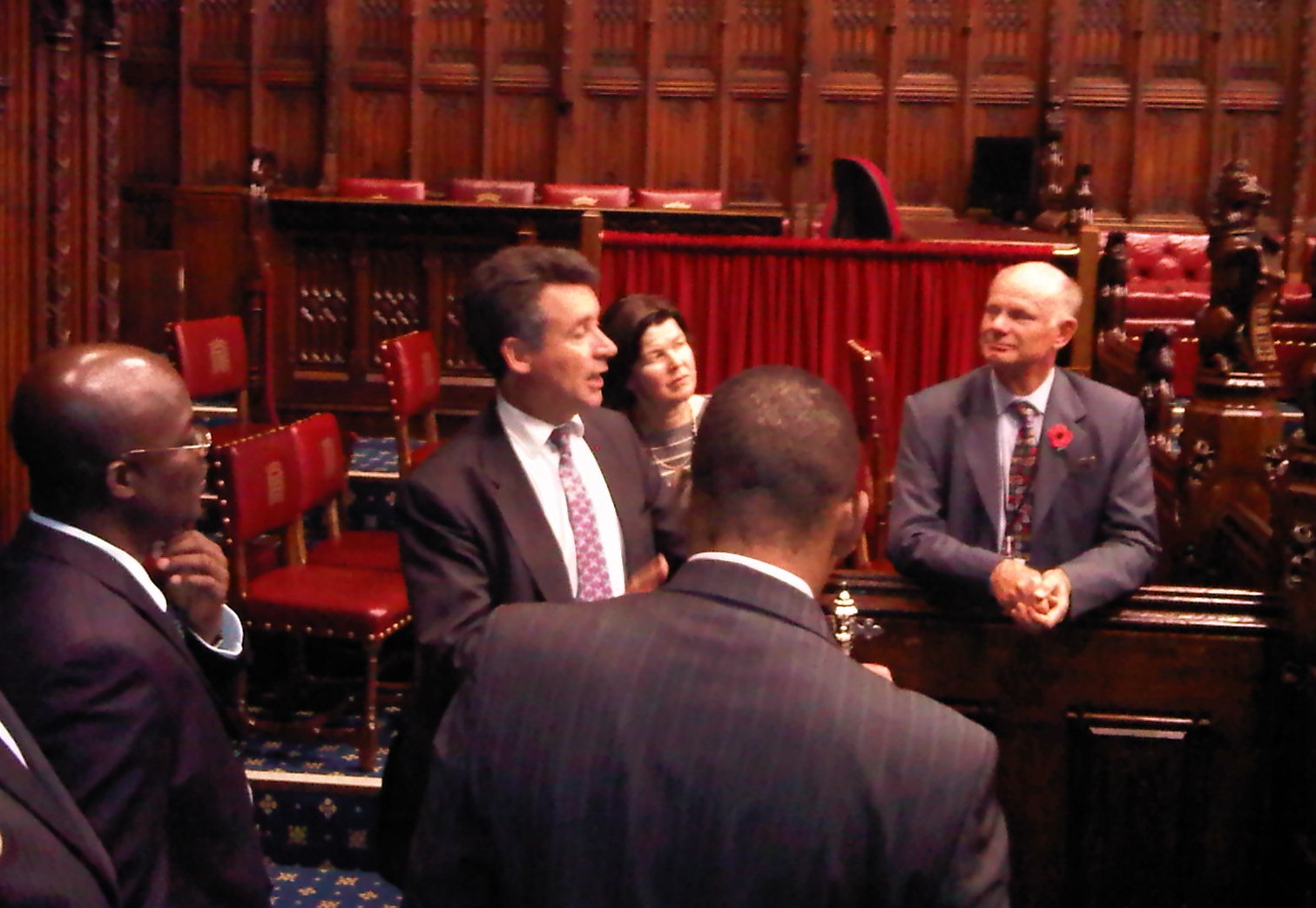 Sumaila, far left, at a meeting of the Marine Advisory Group of GLOBE International in the UK House of Commons.
Daniel Pauly Speaks at IMCC
Daniel Pauly gives the keynote address at the International Marine Conservation Congress.